System Design
Load Estimation
Learn how to estimate daily solar loads using appliance wattage, usage hours, utility bills, surge demand, and day-versus-night consumption.
Load estimation is the first real design step in any solar project.
Before you size panels, choose an inverter, or calculate battery capacity, you need a believable picture of how much electricity the site actually uses. If that number is wrong, every downstream design decision gets pulled off course with it.
That is why load estimation matters so much. An overestimate inflates cost and pushes the whole system toward unnecessary oversizing. An underestimate creates the opposite problem, a system that looks fine on paper but runs short when the weather turns bad or high-consumption appliances stay on longer than expected. In practice, this page feeds directly into Solar System Sizing, Battery Sizing, and Inverter Sizing.
This guide walks through the core energy formula, common appliance assumptions, different ways to estimate usage, and the extra checks that matter for surge loads and battery-backed systems.
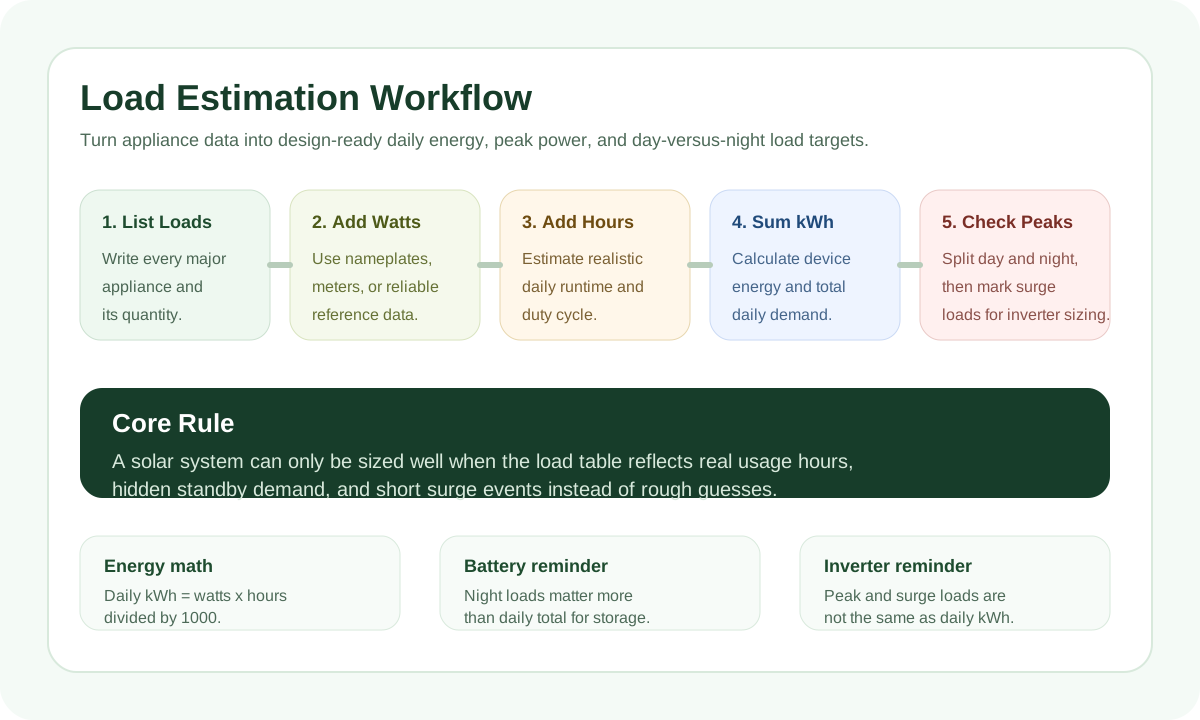
Why Load Estimation Comes First
Section titled “Why Load Estimation Comes First”The load estimate is not just another number in the design file.
It drives almost every major system decision:
- Solar array size
- Inverter rating
- Battery-bank capacity
- Cable and breaker sizing
- Backup duration expectations
Most load-estimation mistakes do not come from forgetting a small device.
They usually come from underestimating the big ones:
- Air conditioners
- Electric water heating
- Pumps
- Refrigeration
- Long evening appliance runtime
That is why realistic usage hours matter just as much as nameplate wattage.
The Core Formula
Section titled “The Core Formula”At the device level, daily energy use is usually calculated like this:
Daily energy (kWh) = rated power (W) x daily usage (h) / 1000You apply that to each appliance, then add everything together.
Total daily load = sum of all device daily kWhThis is simple math, but it becomes powerful because it turns a vague idea of household usage into a design-ready number in kWh/day.
Worked Example
Section titled “Worked Example”Using the example pattern from the research notes:
| Appliance | Power | Daily use | Daily energy |
|---|---|---|---|
| TV | 120 W | 5 h | 0.60 kWh |
| Fan | 75 W | 8 h | 0.60 kWh |
| Fridge | 200 W | 24 h assumed run basis | 4.80 kWh |
| 5 LED lights | 10 W x 5 | 6 h | 0.30 kWh |
Total daily load, about 6.30 kWh/day
That total is what you carry into system-sizing calculations.
Appliance Power Reference, Use as a Starting Point Only
Section titled “Appliance Power Reference, Use as a Starting Point Only”Real wattage should come from the device nameplate, a meter reading, or manufacturer data whenever possible. Still, reference ranges are useful when you are building a first-pass estimate.
| Appliance type | Typical wattage | Practical note |
|---|---|---|
| Fridge | 100 to 400 W | Often runs all day, but actual energy depends on duty cycle |
| Small room air conditioner | 700 to 1200 W | Often one of the biggest daily loads |
| Electric water heater | 1500 to 3000 W | Short runtime but very high draw |
| Washing machine | 500 to 1200 W | Startup surge can be much higher than running draw |
| Microwave | 700 to 1200 W | Short usage, high power |
| Desktop computer | 150 to 400 W | Depends heavily on screen and workload |
| LED bulb | 8 to 15 W | Small individually, meaningful in groups |
| Standby loads combined | 50 to 100 W | Often invisible but significant over time |
Reference tables are helpful, but they should never overwrite actual measured data if you have it.
A Quick Reality Check by Household Size
Section titled “A Quick Reality Check by Household Size”If your estimate feels suspiciously low or high, compare it with broad household ranges.
| Household size | Typical daily use |
|---|---|
1 to 2 people | Around 8 to 15 kWh/day |
3 to 4 people | Around 15 to 25 kWh/day |
5+ people | Around 25 to 35 kWh/day |
These numbers are only sanity checks, not design inputs. A small household with electric cooking, heat pump loads, and frequent air conditioning can easily exceed the range.
Three Practical Ways to Estimate Load
Section titled “Three Practical Ways to Estimate Load”Different projects need different methods. The best one depends on what information you actually have.
1. Appliance-by-appliance method
Section titled “1. Appliance-by-appliance method”This is usually the most accurate method for off-grid and battery-based design.
You list each appliance, note its wattage, estimate daily runtime, and calculate kWh/day one by one.
Best for:
- Off-grid systems
- Hybrid systems with backup planning
- New buildings without long utility history
- Projects where critical loads must be isolated carefully
2. Utility-bill method
Section titled “2. Utility-bill method”If you have annual or monthly electricity bills, you can derive a daily average quickly.
Average daily load = annual kWh / 365Best for:
- Grid-tied systems
- Quick first-pass sizing
- Existing homes with reliable billing history
The limitation is that bills tell you total energy, not when that energy is used. That becomes important once battery sizing or time-of-use strategy enters the picture.

Bills and worksheets are usually the fastest way to turn vague energy habits into design inputs you can actually use. Photo by Skylar Kang on Pexels.
3. Meter-reading method
Section titled “3. Meter-reading method”Another practical approach is to record meter readings for 7 to 14 days and average the difference.
This captures real-world standby loads and hidden consumption that people often forget in appliance lists.
Best for:
- Real occupied homes
- Projects with variable daily use
- Double-checking a manual appliance estimate
Day Loads vs Night Loads
Section titled “Day Loads vs Night Loads”For grid-tied systems without batteries, the daily total may be enough for a first pass.
For hybrid and off-grid systems, it is not enough.
You need to split the load into:
- Daytime load, which solar can often serve directly
- Nighttime load, which usually has to come from batteries
This distinction matters because two sites with the same total daily kWh can need very different battery sizes if one uses most of its power after sunset.
Simple example
Section titled “Simple example”Two homes both use 10 kWh/day.
- Home A uses
7 kWhduring the day and3 kWhat night - Home B uses
3 kWhduring the day and7 kWhat night
Their solar array sizing may be similar, but their battery requirements can be very different.
That is why load timing is part of load estimation, not only part of battery design. If backup or overnight use matters, continue straight into Battery Sizing once the worksheet is finished.
Peak Load and Surge Load
Section titled “Peak Load and Surge Load”After you estimate daily energy, the next check is peak demand.
Some devices need much more power for a few seconds during startup than they do during steady operation. That short spike is called surge load or startup load.
A simple rule-of-thumb estimate is:
Peak surge power = rated power x 3For example:
Water pump = 300 WEstimated surge = 300 x 3 = 900 WSome motor-driven equipment can surge even higher than that, so actual manufacturer data is better when available.
This matters because the inverter and distribution hardware must survive the highest short-duration demand, not just the average running wattage. That is the handoff point to Inverter Sizing, where peak and surge checks start to govern hardware choice.
Why Duty Cycle Matters
Section titled “Why Duty Cycle Matters”One of the biggest beginner mistakes is treating every appliance as if it runs at full rated power for all of the hours it is plugged in.
That can badly distort the result.
A fridge is the classic example. It may be connected for 24 hours, but the compressor does not run at full draw every minute of the day. The same logic applies to thermostatically controlled loads, pumps, and some cooling equipment.
That is why good load estimation uses realistic duty cycle assumptions rather than naive continuous operation unless you are intentionally being conservative.
A Good Load Worksheet Structure
Section titled “A Good Load Worksheet Structure”When you build a load table, include at least these columns:
| Column | Why it matters |
|---|---|
| Appliance name | Identifies the load clearly |
| Quantity | Captures grouped devices like lights or fans |
| Rated power in watts | Starting point for energy math |
| Hours used per day | Converts power into daily energy |
Daily energy in kWh | Final design input |
| Day or night label | Helps battery sizing later |
| Surge flag | Helps inverter sizing later |
That one worksheet often becomes the backbone for the rest of the solar design, including battery runtime checks, cable current checks, and inverter surge planning.
Common Load Estimation Mistakes
Section titled “Common Load Estimation Mistakes”- Using guessed appliance wattage when a nameplate or plug meter is available
- Forgetting standby loads, routers, chargers, and always-on electronics
- Underestimating runtime for air conditioning, pumping, or hot water
- Ignoring seasonal changes in cooling or heating demand
- Mixing up daily energy use with simultaneous peak power
- Skipping the day-versus-night split on systems with batteries
- Forgetting startup surge from motors and compressors
Most undersized systems do not start with a bad panel formula.
They start with an overly optimistic load table.
A Practical Workflow
Section titled “A Practical Workflow”Use this order and the estimate usually stays grounded.
- Gather real wattage data from appliance labels, bills, or metering
- Build a device table with realistic daily hours
- Add up total
kWh/day - Separate daytime and nighttime loads if storage is involved
- Identify the highest simultaneous loads and likely surge loads
- Use those numbers to size the array, inverter, and battery bank
That sequence keeps energy and power from getting mixed together.
Related Guides in Focus Solar
Section titled “Related Guides in Focus Solar”- Solar System Sizing
- Battery Sizing
- Inverter Sizing
- Cable Sizing
- Solar System Size Calculator
- Battery Sizing Calculator
Watch or Read More
Section titled “Watch or Read More”Key Takeaways
Section titled “Key Takeaways”- Load estimation is the starting point for sizing panels, batteries, and inverters.
- The core device formula is watts times daily hours divided by
1000. - For battery-backed systems, day and night energy use should be separated early.
- Peak surge power can matter just as much as daily
kWhwhen choosing an inverter. - The most reliable designs start with measured or labeled data, not rough guesses.
Sources Used for This Page
Section titled “Sources Used for This Page”This page was expanded using the research notes and source list provided for this project, especially the following references.
- EcoFlow, How to Calculate kWh Usage for Your Home
- Energy Matters, How to Calculate Your Solar Power Effectively
- EnergiePanda, How to Calculate Daily Energy Consumption
- SolarStik, Calculate the Load
- ComeRiver, How to Calculate Your Daily Power Consumption
- S. Ravivarman, Basics of Load Estimation
- Anker SOLIX, How to Do Solar Panel Calculations
- YouTube, Performing a Load Analysis for Battery-based Solar Systems