Components
Inverters
A hub page covering solar inverter types, sizing logic, compatibility checks, and the inverter guides that matter most for real system design.
The inverter is the part of a solar system that makes the electricity usable.
Solar panels generate DC power. Homes, businesses, and the grid use AC power. The inverter is the bridge between those two worlds, but it is not just a converter anymore.
The inverter also shapes:
- how the system performs under shade
- how much monitoring detail you get
- how well the array and inverter are matched
- how easy it is to add storage later
- whether the system can support backup functions
That is why inverter choice is one of the most important architecture decisions in a solar project.
This hub page gives you the big picture first, then points you to the inverter pages where each topic is explained in more detail.
Why Inverters Matter So Much
Section titled “Why Inverters Matter So Much”Solar.com’s overview gives the clean baseline:
solar panels produce direct current, and the inverter converts it into alternating current that the site can actually use.
That is the foundational job.
But in real systems, the inverter also influences things buyers care about immediately:
- cost
- monitoring
- shade tolerance
- system expandability
- battery readiness
- export and compliance behavior
That is why inverter decisions often change the whole project, not just one component line in the quote.
The Main Types of Solar Inverters
Section titled “The Main Types of Solar Inverters”The first decision is usually type, not brand.
Solar.com, SolaX, SRNE, Afore, and other guides all converge on the same core families.
String Inverters
Section titled “String Inverters”A string inverter is the standard centralized approach.
It works well when:
- the roof is simple
- the panels face the same direction
- shade is limited
- the project wants the lowest cost architecture
This is why string inverters are still the most common baseline in straightforward rooftop systems.
Their main trade-off is that panel-level mismatch or shading can affect the whole string more easily than in more distributed architectures.
Microinverters
Section titled “Microinverters”Microinverters move the conversion closer to each panel.
That makes them especially attractive when:
- there is partial shade
- the roof has multiple orientations
- panel-level monitoring matters
- future panel expansion may be useful
They usually cost more upfront, but they can make sense when the roof is complex enough that centralized simplicity stops being an advantage.
Hybrid Inverters
Section titled “Hybrid Inverters”Hybrid inverters matter because they turn the inverter into an energy manager, not just a converter.
They are built to coordinate:
- solar generation
- battery charging and discharge
- load support
- grid interaction
- in many cases, backup behavior
That is why hybrid inverters are often the most relevant choice for storage-ready systems.
Central Inverters
Section titled “Central Inverters”Central inverters matter less in ordinary home systems, but they are still part of the bigger inverter map.
They are more common in:
- larger commercial systems
- utility-scale projects
- applications where very large centralized conversion makes more sense than distributed rooftop architecture
For most residential readers, they are useful to know about but not usually the first purchase path.
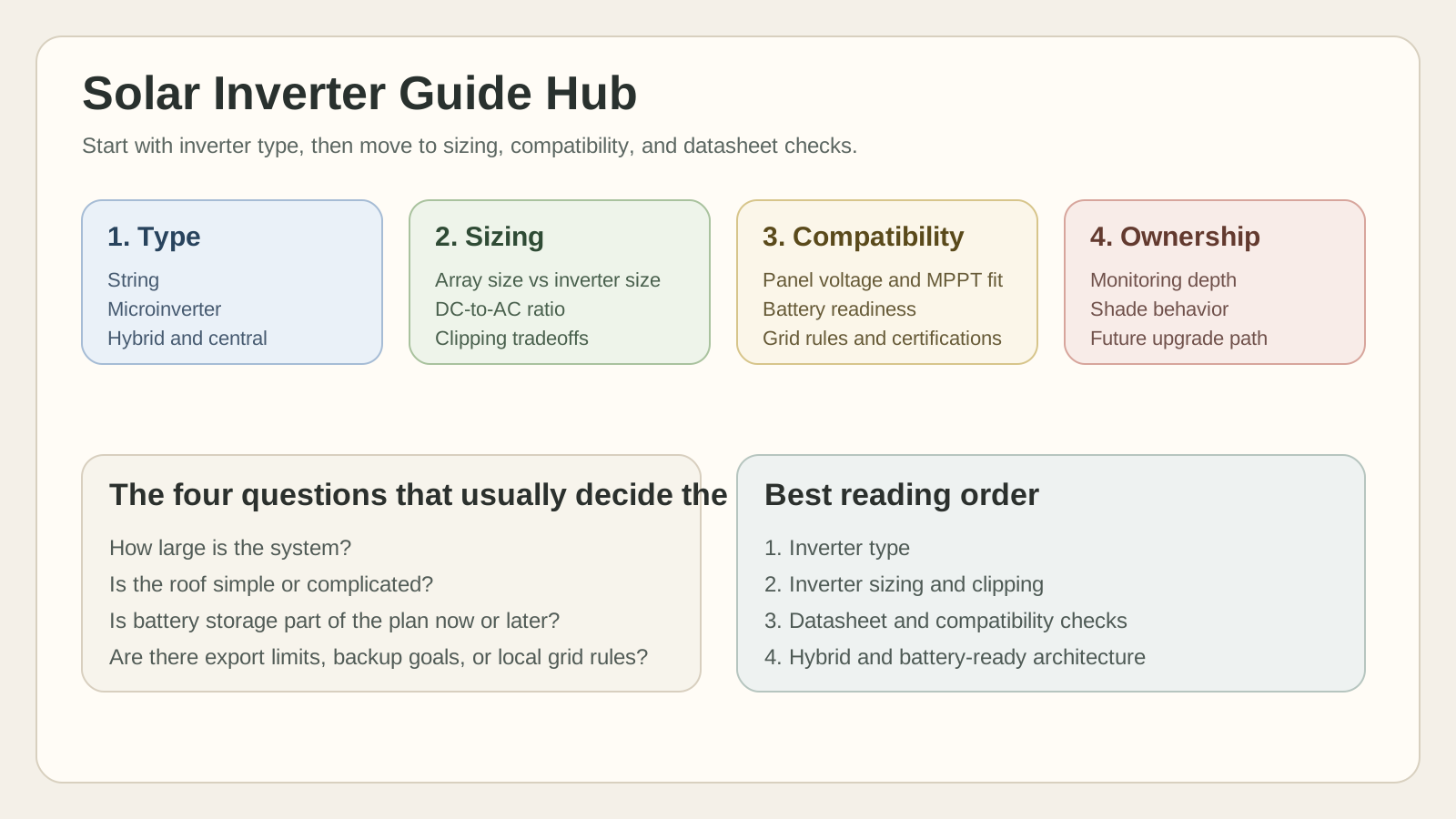
The First Four Questions That Usually Decide the Inverter Path
Section titled “The First Four Questions That Usually Decide the Inverter Path”If you want a fast decision framework, these four questions do most of the work.
- How large is the system?
- Is the roof simple or complicated?
- Is battery storage part of the plan now or later?
- Are there export limits, backup goals, or local compliance constraints that change the design?
That is usually a clearer starting point than asking which inverter brand is best.
Inverter Sizing Is Really a Matching Problem
Section titled “Inverter Sizing Is Really a Matching Problem”One of the most important things EnergySage and other sizing guides emphasize is that inverter choice is not only about wattage.
It is about matching:
- the array
DCsize - the inverter
ACsize - the roof conditions
- the load or export goals
- the broader system architecture
In residential systems, DC-to-AC ratios around 1.15 to 1.25 are common starting points.
That is why systems such as 6.6 kW of panels paired with a 5 kW inverter are so common in the real world.
The reason is not that one number is magically correct.
It is that the array and inverter are being matched for a balance of cost, clipping behavior, and expected production.
Why Type Comes Before Datasheet Reading
Section titled “Why Type Comes Before Datasheet Reading”Penn State’s inverter reference is a great reminder that technical compatibility still has to be verified field by field.
But before that, you still need to know what kind of inverter architecture you are even evaluating.
That is why the practical order is:
- choose the inverter type
- size it against the array and project goals
- then verify the actual electrical parameters in the datasheet
If you skip that order, it is easy to get distracted by isolated specs without noticing that the architecture itself is a mismatch.
The Compatibility Checks That Matter Most
Section titled “The Compatibility Checks That Matter Most”Once inverter type and rough size are decided, the next layer is compatibility.
The easiest way to think about this is to split compatibility into three buckets.
Panel and Array Compatibility
Section titled “Panel and Array Compatibility”This is the DC side.
You need to confirm:
- maximum
DCinput voltage - start-up voltage
- operating voltage range
MPPTrange- maximum input current
These are the numbers that tell you whether the array and inverter can actually live together electrically.
Battery Compatibility
Section titled “Battery Compatibility”This matters most for hybrid systems.
You should verify:
- whether the inverter supports the battery architecture you want
- whether it supports the battery communication protocol
- whether the battery is on the approved compatibility list
- whether backup and charging behavior fit the use case
Battery-ready is not always the same thing as battery-friendly.
Grid Compliance
Section titled “Grid Compliance”This is the part people skip until too late.
Penn State’s material makes the point clearly:
grid-tied inverters need to meet local interconnection and anti-islanding requirements.
That means compliance is not just paperwork.
It is a functional safety requirement.
Monitoring and Visibility Matter More Than People Expect
Section titled “Monitoring and Visibility Matter More Than People Expect”Not all inverters give you the same level of visibility into the system.
Some architectures make it much easier to see:
- panel-level behavior
- string-level mismatch
- underperforming modules
- system faults and alerts
That is one reason inverter choice affects ownership experience as much as raw energy conversion.
A system that is harder to diagnose may be cheaper on day one and more annoying for years afterward.
The Most Useful Subtopics in This Section
Section titled “The Most Useful Subtopics in This Section”The inverter section becomes much easier to navigate if you think of it as four connected questions.
What type of inverter fits the roof and project goal
Section titled “What type of inverter fits the roof and project goal”That is where type comparisons matter.
How large should the inverter be
Section titled “How large should the inverter be”That is where sizing and DC-to-AC ratio matter.
How do I verify the match technically
Section titled “How do I verify the match technically”That is where datasheet reading matters.
What if storage or backup is part of the design
Section titled “What if storage or backup is part of the design”That is where hybrid inverter logic matters.
That is the real structure of this whole section.
Start With These Inverter Guides
Section titled “Start With These Inverter Guides”Related Buying and Design Guides
Section titled “Related Buying and Design Guides”- How to Choose an Inverter
- How to Read an Inverter Datasheet
- Hybrid Inverter Explained
- Inverter Sizing
- How to Choose a Solar System
Read More From External Sources
Section titled “Read More From External Sources”Key Takeaways
Section titled “Key Takeaways”- The inverter is not just a converter. It affects monitoring, shading behavior, battery readiness, compliance, and long-term system flexibility.
- Most inverter decisions start with type, then move into sizing, then into detailed compatibility checks.
- String, micro, and hybrid inverters each solve different design problems, so the right choice depends on the roof, system goals, and storage plan.
DC-to-ACratio and datasheet fields such asMPPTrange and maxDCvoltage matter because inverter selection is a matching problem, not just a brand choice.- The cleanest reading order is type first, sizing second, datasheet third, and storage/backup logic alongside those decisions when relevant.
Sources Used for This Page
Section titled “Sources Used for This Page”- Solar.com, Solar Inverters: Types, Pros and Cons
- EnergySage, How Does Sizing a Solar Inverter Work?
- Penn State AE 868, Interpreting inverter datasheet and main parameters
- Electrical Academia, Inverter Specifications and Data Sheet
- SRNE Solar, Solar Power Inverters: How to Choose the Right Type
- Afore, Types of Solar Inverters: String, Micro, and Hybrid Compared