Buying Guide
How to Choose Solar Panels
Learn how to compare solar panel efficiency, temperature performance, degradation, warranty, and panel type before choosing a module for your system.
Not all solar panels are equal, and not all of the differences matter in the same way.
Some buyers fixate on the highest efficiency number on the market. Others focus only on price. In reality, a good panel choice usually comes from balancing roof space, long-term output, climate performance, warranty quality, and the kind of system you are building.
This guide is designed to help you compare panels the way a careful buyer should, not by chasing a single headline spec, but by understanding which specs matter most for your site.
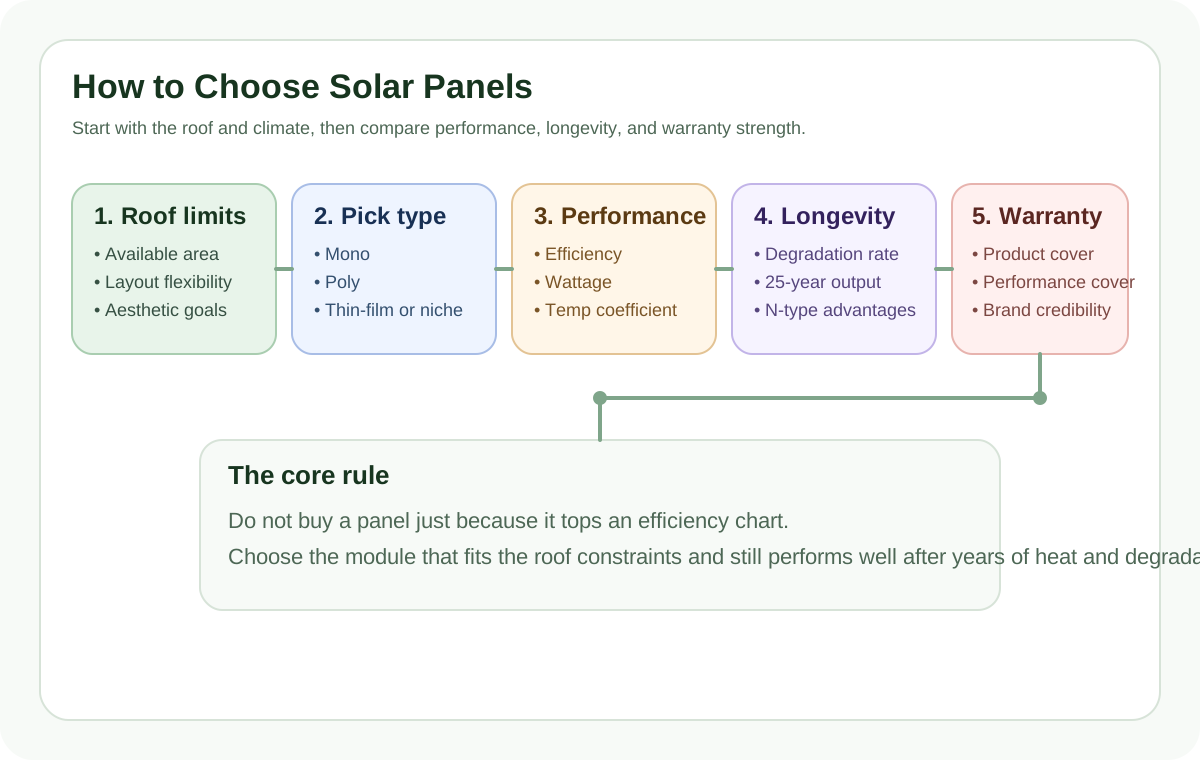
Start With the Real Buying Question
Section titled “Start With the Real Buying Question”Before comparing brands, ask these questions first.
- Is roof space limited, or do you have room to spare
- Does the site get very hot in summer
- Is long-term output more important than lowest upfront cost
- Are you building a simple rooftop system, a ground-mount, or something more specialized
- Do aesthetics and uniform appearance matter
These questions shape what kind of panel actually makes sense. A high-efficiency premium module can be the right answer on a constrained roof. On a larger roof with less pressure on space, a slightly cheaper panel with solid warranty support may deliver better value.
The Five Specs That Matter Most
Section titled “The Five Specs That Matter Most”If you want the fast version, these are the panel specs worth paying attention to.
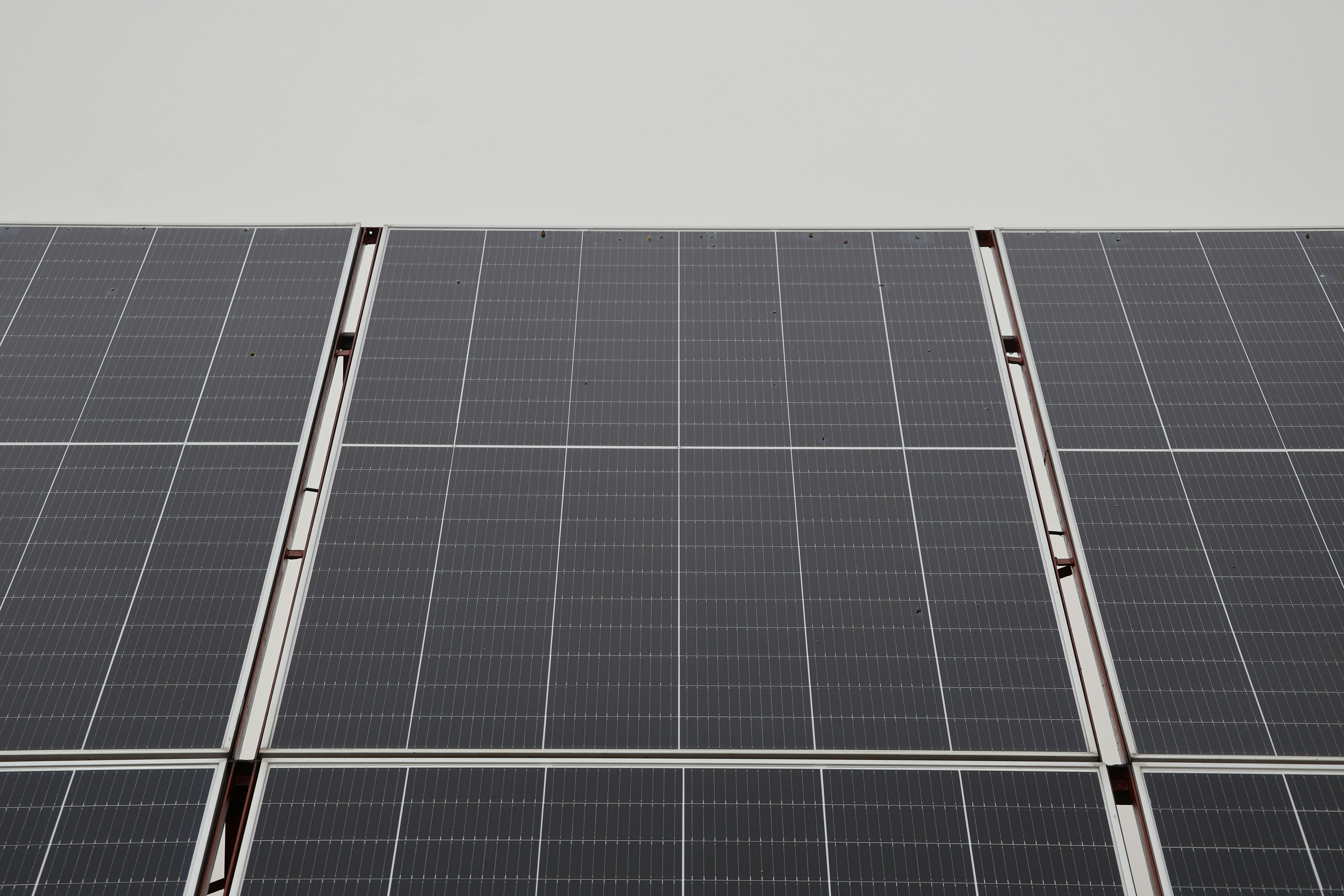
Panel buying gets easier when you stop thinking in brand slogans and start looking closely at module-level specs. Photo by Sami Raad on Pexels.
| Spec | What it tells you | Why it matters |
|---|---|---|
| Efficiency | How much sunlight becomes electricity per unit area | Matters most when roof space is limited |
| Temperature coefficient | How output changes as panel temperature rises | Important in hot climates and on heat-exposed roofs |
| Degradation rate | How quickly output falls over time | Shapes long-term production and return on investment |
Wattage, Wp | Rated output under standard test conditions | Helps determine array size and panel count |
| Product and performance warranty | Manufacturer commitment to defect protection and long-term output | Helps judge long-life value and risk |
That is the core framework.
The panel with the biggest wattage is not always the best panel.
The most efficient panel is not always the best-value panel.
And the cheapest panel is often only cheap at the moment you sign.
Efficiency, Important but Easy to Misread
Section titled “Efficiency, Important but Easy to Misread”Panel efficiency measures how much sunlight a panel converts into electricity across a given surface area.
Modern residential modules commonly sit around the low-20% range, with premium products pushing higher. Recent top-end products have crossed into the 24% range, but that does not mean every buyer should pay for the highest number available.
Efficiency matters most when roof space is the constraint.
If you only have enough roof area for a limited number of modules, higher efficiency may let you fit more total system capacity. If you have plenty of roof space, small efficiency differences may matter less than warranty support, price, or degradation profile.
This is why efficiency should be treated as a space-efficiency metric, not a universal ranking of goodness.
If you want a deeper explanation, read Panel Efficiency Explained.
Temperature Coefficient, Quietly Important in Hot Climates
Section titled “Temperature Coefficient, Quietly Important in Hot Climates”Solar panels do not like heat as much as people assume.
They like sunlight.
As panel temperature rises, output usually falls. The temperature coefficient tells you how much performance drops for each degree Celsius increase above the test condition.
Panels with a less negative coefficient generally hold performance better in hot conditions. A module around -0.24%/°C will usually handle heat better than one around -0.35%/°C.
If the roof gets very hot or the site lives in a high-temperature climate, this spec deserves more attention than many buyers give it.
Degradation Rate, the Long-Term Value Metric
Section titled “Degradation Rate, the Long-Term Value Metric”Every panel loses output over time. The useful question is how fast.
Good modern panels often degrade at less than about 0.5% per year, which means they can still retain a strong share of original output after 25 years. That is one reason long-term performance warranties matter so much.
If two panels look similar on day one, the lower degradation rate may be what separates them over decades of operation.
This is also why performance warranty language matters. A panel that promises stronger retained output after 25 years may be a meaningfully better long-term asset even if the upfront price is higher.
If you want to understand the topic in more detail, read Panel Degradation Rate.
Wattage Is Not the Whole Story
Section titled “Wattage Is Not the Whole Story”Peak wattage, often written as Wp, tells you the panel’s rated output under standard test conditions.
Typical residential modules today often fall somewhere in the 300 to 550 W range depending on format and technology.
Higher wattage can be useful because it may reduce panel count for the same system size. But wattage should always be read together with dimensions, efficiency, electrical characteristics, and roof layout.
A larger panel is not always easier to use. Sometimes roof geometry makes smaller-format modules the more flexible design choice.
Product Warranty vs Performance Warranty
Section titled “Product Warranty vs Performance Warranty”Buyers often lump these together, but they are not the same.
| Warranty type | What it covers |
|---|---|
| Product warranty | Defects in materials and manufacturing |
| Performance warranty | Minimum expected output retention over time |
Many mainstream panels now offer long warranty periods, often around 25 years, and some premium products push further. The stronger question is not only how long the warranty runs, but how credible the manufacturer is and how practical a claim would be in real life.
That is why warranty length alone is not enough. Backing, service network, and manufacturer track record matter too.
Monocrystalline vs Polycrystalline vs Thin-Film
Section titled “Monocrystalline vs Polycrystalline vs Thin-Film”Most residential buyers today will primarily compare monocrystalline panels, but it still helps to understand the broader field.
| Type | Typical strength | Typical limitation | Best fit |
|---|---|---|---|
| Monocrystalline | Highest efficiency and strongest mainstream residential performance | Usually higher price | Space-constrained roofs and premium residential installs |
| Polycrystalline | Historically lower cost | Lower efficiency and increasingly less common in premium residential use | Budget-focused or large-area installs |
| Thin-film | Lightweight or specialty form factors | Much lower efficiency in many mainstream cases | Specialty building integration or flexible installations |
For most standard homes, monocrystalline is usually the default answer today because it aligns best with modern efficiency expectations and limited roof space.
N-type vs P-type, One of the More Important Modern Shifts
Section titled “N-type vs P-type, One of the More Important Modern Shifts”Beyond the old monocrystalline versus polycrystalline distinction, buyers increasingly run into N-type and P-type cell language.
This matters because many newer high-performance panels use N-type architectures such as TOPCon or HJT, which tend to offer lower degradation and stronger temperature behavior than older P-type designs.
That does not mean every N-type panel is automatically the best buy.
It does mean that if you are comparing a newer premium module against an older mainstream one, this is often part of the performance difference you are paying for.
Bifacial Panels, Great in the Right Context
Section titled “Bifacial Panels, Great in the Right Context”Bifacial panels can produce additional energy from reflected light hitting the rear side of the module. In the right installation, that extra production can be meaningful.
But context matters.
Bifacial panels make the most sense in situations like these.
- Ground-mount systems
- Elevated carports or canopies
- Light-colored roofs or surfaces with strong reflectivity
For ordinary rooftop installs, the real-world gain may be more limited. This is one of those features that can be excellent when the design supports it and underwhelming when used only as a marketing point.
How to Compare Real Panel Options
Section titled “How to Compare Real Panel Options”If you are down to a shortlist, compare the models in this order.
- Efficiency and dimensions, especially if roof space is tight
- Temperature coefficient for hot-climate performance
- Degradation rate and retained output after
25years - Product warranty and manufacturer credibility
- Cost per watt in the context of system-level value, not just module price
That sequence usually tells you more than a generic best-panels ranking alone.
Brand Comparisons, Useful but Easy to Overread
Section titled “Brand Comparisons, Useful but Easy to Overread”Lists of the most efficient solar panels are useful for orientation. They help show which brands lead on performance, and they often highlight premium lines from companies like Maxeon, REC, Panasonic, Canadian Solar, or Jinko Solar.
But rankings do not choose the panel for you.
The best panel on a national ranking is not automatically the best panel for your roof, your installer network, or your budget. Local availability, installer familiarity, and after-sales support still matter.
Red Flags to Watch For
Section titled “Red Flags to Watch For”- Very strong efficiency claims with weak or vague warranty language
- No clear degradation or retained-output figures
- Big wattage claims without checking panel dimensions and layout impact
- Sales language about premium quality without model numbers or datasheets
- Choosing on brand name alone without checking local installer support
This is one of the quiet ways solar quotes get distorted. Buyers compare brand reputation while skipping the actual specification sheet.
A Good Default Decision Framework
Section titled “A Good Default Decision Framework”If you want the compact rule set, use this order.
- Confirm whether roof space makes efficiency a high priority
- Check temperature coefficient if the site runs hot
- Compare degradation and warranty for long-term value
- Decide whether newer
N-typetechnology is worth the premium - Judge the final panel inside the full system quote, not as an isolated trophy spec
That framework usually produces a better buying decision than chasing whichever panel tops a ranking table in a given year.
Related Guides in Focus Solar
Section titled “Related Guides in Focus Solar”- How to Choose a Solar System
- How to Choose an Inverter
- How to Choose a Battery
- Panel Efficiency Explained
- Panel Degradation Rate
- How to Read a Panel Datasheet
Watch or Read More
Section titled “Watch or Read More”Key Takeaways
Section titled “Key Takeaways”- Efficiency matters most when roof space is limited, not as a universal winner metric.
- Temperature coefficient and degradation rate are two of the most important long-term specs buyers overlook.
- Monocrystalline panels are usually the mainstream residential default, while
N-typeproducts increasingly lead the premium segment. - Warranties matter, but the credibility behind the warranty matters just as much.
- The right solar panel is the one that fits the roof, the climate, and the economics of the full system, not just the one with the flashiest headline number.
Sources Used for This Page
Section titled “Sources Used for This Page”This page was expanded using the research notes and source list provided for this project, especially the following references.
- EnergySage, Best Solar Panels Complete Ranking
- CNET, Most Efficient Solar Panels 2025
- CNET, Best Solar Panels for Your Home 2025
- EnergySage, Solar Panel Buyer’s Guide
- EnergySage, Which Type of Solar Panel?
- NREL, PV Degradation Rate Study
- DOE, Understanding PV System Performance
- YouTube, Best Solar Panels in 2025, What to Look for and How to Choose