Pricing & ROI
10kW Solar System Cost
Learn what a 10kW solar system costs in 2025 and 2026, what is included, what drives pricing, and how batteries and incentives change the total.
A 10 kW solar system sits in a very different part of the market from a 5kW solar system.
It is often the size people start considering when they have a larger home, higher annual electricity use, an EV charger, a heat pump, a swimming pool, or a small business load that a smaller residential system would only partly offset.
That larger size usually brings two things at once. The total project cost goes up sharply, but the price per watt often improves because bigger systems spread fixed soft costs more efficiently.
This guide breaks down current 10 kW price ranges in major markets, explains what is usually included, shows what pushes quotes higher or lower, and highlights the incentive timing issue U.S. buyers still need to handle carefully in 2026. It helps to keep the broader Solar System Cost Guide in view too, because larger systems often change both price-per-watt and scope assumptions at the same time.
Quick Cost Snapshot
Section titled “Quick Cost Snapshot”At 10 kW, the headline number is useful, but the details matter even more than they do on smaller systems.
United States
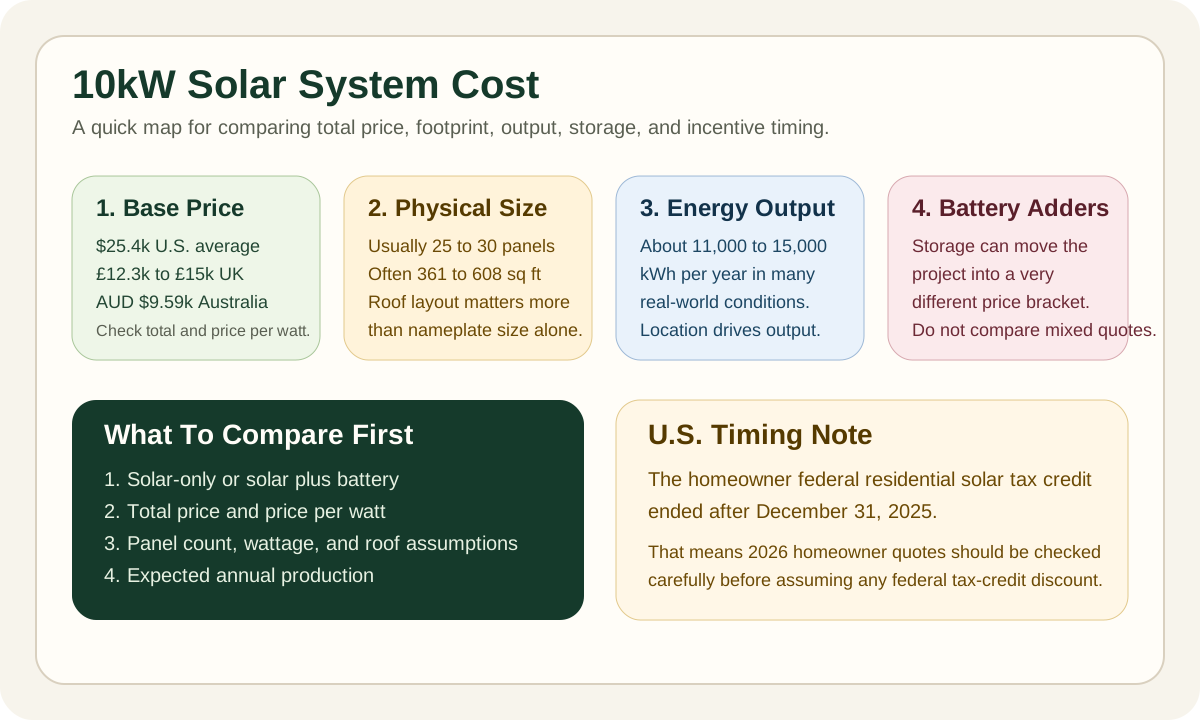
Section titled “United States”EnergySage’s real-installation data says a 10 kW system cost about $25,400 before incentives in 2025, with major state variation from about $20,200 in Arizona to about $30,500 in Massachusetts.
That lands very close to the broader 2026 rule-of-thumb range from other market sources:
$25,000 to $30,000 before incentivesSolarReviews’ system-size table also shows why larger systems can be more economical on a per-watt basis. In its 2026 cost table, a 10 kW system is listed at about $28,600, or about $2.86/W, lower than smaller systems in the same table.
United Kingdom
Section titled “United Kingdom”Recent UK pricing guides put a 10 kW solar-only system around:
£12,300 to £15,000GreenMatch also estimates that adding battery storage can move the total project cost to roughly:
£16,000 to £23,500That makes 10 kW one of the clearest examples of how battery scope changes a quote from “large solar project” to “large solar-plus-storage project.”
Australia
Section titled “Australia”Solar Choice’s April 2026 city comparison shows a national average of about AUD $9,590 for a 10 kW system, with strong variation by city, from about AUD $7,800 in Canberra to about AUD $14,960 in Darwin.
Australian pricing references also commonly place a 10 kW solar-plus-battery project in the rough range of:
AUD $18,000 to $28,000Why 10kW Pricing Behaves Differently From 5kW
Section titled “Why 10kW Pricing Behaves Differently From 5kW”A 10 kW system is not just a doubled 5 kW quote.
The total is obviously higher, but larger systems usually benefit from some economy of scale because several soft-cost items do not double cleanly with size. Sales effort, design time, permitting overhead, truck rolls, and some electrical labor often rise more slowly than module count.
That is why the cost per watt on bigger systems usually trends lower than on smaller systems, even though the total check the customer writes is much larger.
What a 10kW System Usually Includes
Section titled “What a 10kW System Usually Includes”A complete installed 10 kW system usually includes:
- Solar panels
- Inverter or inverter architecture
- Mounting and racking
DCcabling and connectors- Electrical balance-of-system parts
- Monitoring
- Labor, permitting, and commissioning
Depending on the project, it may also include:
- Battery storage
- Main-panel upgrades
- Three-phase inverter configurations
- More complex roof-access or structural work
At this system size, quote scope becomes especially important. Some installers still present it like a straightforward residential roof job. Others price it more like a semi-custom high-consumption installation with extra design and electrical work.
That is why a 10 kW proposal often benefits from a second pass through How to Choose an Inverter and How to Choose a Solar System before you decide whether it is actually expensive or simply more complete.
How Many Panels Are in a 10kW System
Section titled “How Many Panels Are in a 10kW System”That depends on panel wattage.
Older or lower-wattage assumptions can push the count into the 30+ range, while modern higher-output modules can bring the count down materially.
Useful reference points:
- Around
25panels if the installer is using400 Wmodules - Around
30panels if the installer is using330 Wmodules - Roughly
20to34panels across the broader real-world range of module wattages now in use
This is why “how many panels?” is not enough to compare quotes. You need the actual module wattage, model, and efficiency to understand the footprint and value.
How Much Roof Space Does a 10kW System Need
Section titled “How Much Roof Space Does a 10kW System Need”10 kW systems are large enough that roof space starts to become a real design constraint for many homes.
Sources in the current market commonly place roof-space needs around:
- About
361to608 sq ftacross broad real-world layouts - About
440to475 sq ftfor many standard roof-mounted residential assumptions - About
50to65 m²in Australian residential guidance
That usually means 10 kW is a better fit for:
- Larger roofs with fewer obstructions
- Homes with garage roofs or multiple usable roof planes
- Properties where aesthetic constraints are less restrictive
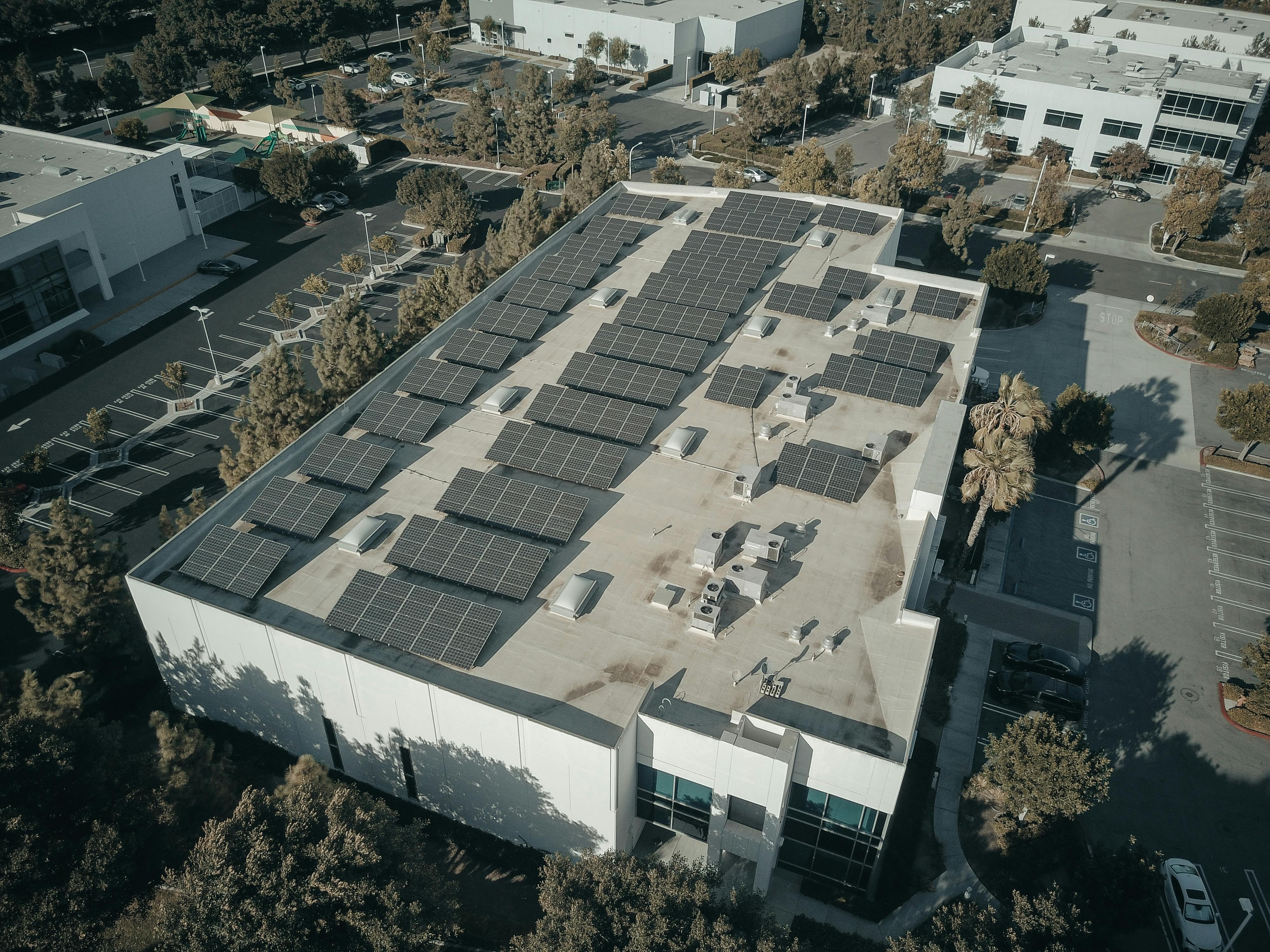
Once a project reaches 10 kW, available roof area and layout efficiency become much more visible cost drivers. Photo by
Kindel Media on Pexels.
What a 10kW System Can Produce
Section titled “What a 10kW System Can Produce”Output varies more by geography than cost does.
EnergySage says a 10 kW system produces about 14,517 kWh per year on average in the U.S. Solar Permit Solutions and GridWorks frame the broader practical range at about 11,000 to 15,000 kWh annually, or roughly 30 to 44 kWh per day in many real-world conditions. To judge whether that output is realistic for your property rather than just for a market average, jump next to Solar System Sizing.
That makes 10 kW a practical size for:
- Larger all-electric homes
- Homes with above-average cooling demand
- Households with EV charging
- Small businesses with steady daytime load
It can be oversized for efficient low-usage households, but it becomes a sensible candidate much faster once electrification loads are added.
Price Per Watt Matters Even More at 10kW
Section titled “Price Per Watt Matters Even More at 10kW”At this size, price per watt is one of the quickest ways to see whether a quote is in the right neighborhood.
Price per watt = total installed cost / system size in wattsFor example:
$25,400 / 10,000 W = $2.54/WThat lines up well with EnergySage’s 10 kW benchmark and helps explain why bigger systems can look expensive in total dollars while still being efficient purchases on a per-watt basis.
What Pushes a 10kW Quote Higher or Lower
Section titled “What Pushes a 10kW Quote Higher or Lower”The main cost drivers are familiar, but they become more visible at 10 kW.
Equipment class
Section titled “Equipment class”Premium modules, premium inverters, microinverters, and battery-ready hybrid architectures all increase total cost.
Roof complexity
Section titled “Roof complexity”Steep pitch, tile roofs, multi-plane layouts, longer conduit runs, and difficult access add labor and installation time.
Electrical scope
Section titled “Electrical scope”At 10 kW, panel upgrades, breaker changes, export-limit hardware, and three-phase considerations show up more often than they do on smaller residential systems.
Battery storage
Section titled “Battery storage”This is still the largest optional add-on. In the UK and Australia, storage can add many thousands to the quote. In U.S. residential projects, it often shifts the project from “solar payback purchase” to “energy resilience purchase.” That is also the point where How to Choose a Battery stops being optional reading.
Permits and engineering
Section titled “Permits and engineering”Some published price guides understate the impact of plan-set work, permit fees, or engineering review. At 10 kW, those items become more likely to matter, especially in stricter jurisdictions.
Installer positioning
Section titled “Installer positioning”A value-oriented installer may quote a standard string-inverter package. A premium installer may price better monitoring, premium hardware, stronger workmanship terms, and higher-touch project management into the deal.
A Practical Component Cost Breakdown
Section titled “A Practical Component Cost Breakdown”A 10 kW quote is usually being shaped by these buckets:
- Panels and mounting
- Inverter architecture
- Electrical hardware and wiring
- Labor and roof work
- Permits, design, and administration
- Optional battery storage
That means two quotes with the same wattage can still be very far apart if one includes premium modules, microinverters, monitoring, a panel upgrade, and storage while the other is solar-only with standard hardware.
Solar-Only vs Solar-Plus-Storage
Section titled “Solar-Only vs Solar-Plus-Storage”This distinction is where many buyers get lost.
If a quote is for solar-only, you are mostly evaluating energy offset and payback. If a quote includes storage, you are also paying for backup capability, self-consumption shifting, and resilience.
That is why a 10 kW project can look like:
- a straightforward large residential solar job
- a solar-plus-battery backup package
- a light-commercial system for a small business
Those are not interchangeable purchases, even when the array size is identical.
10kW vs 5kW: When the Bigger System Makes Sense
Section titled “10kW vs 5kW: When the Bigger System Makes Sense”A 5 kW system is often enough for smaller or medium-usage homes. A 10 kW system becomes more logical when one or more of these are true:
- Your annual usage is well above average
- You expect future electrification loads
- You want to cover a larger share of daytime commercial load
- Your roof has the space and sun access to justify a larger array
The wrong reason to jump to 10 kW is simply “more must be better.” The right reason is that your load profile, roof area, and economics actually support the larger system.
For some sites, that larger-system conversation also starts to overlap with Commercial Solar Cost, especially if the property has steady daytime business loads rather than a typical home profile.
U.S. Incentive Update, Use Exact Dates
Section titled “U.S. Incentive Update, Use Exact Dates”This is the time-sensitive point to handle carefully.
Solar.com’s tax-credit FAQ says the homeowner-claimed federal residential solar tax credit, 25D, was terminated on December 31, 2025. Systems installed in 2025 could still qualify for the full 30%, but systems installed after December 31, 2025 no longer qualify for a federal residential solar tax credit.
That means any U.S. homeowner 10 kW quote in 2026 should be treated as a pre-credit sticker price unless a different ownership structure changes the incentive treatment.
One nuance matters here: some 2026 market tables still show “cost after tax credit” columns because they are reusing older comparison formats. Those are still useful for illustrating scale economics, but they are not automatically current for homeowner-owned systems installed in 2026.
Is a 10kW System Good Value?
Section titled “Is a 10kW System Good Value?”That depends on four questions:
- How much electricity does your property actually use now
- How likely are future loads such as EV charging or electric heating
- What price per watt are you being quoted
- Whether the system is solar-only or solar plus battery
In the UK, GreenMatch estimates a break-even point of around 5 years under its assumptions. In the U.S., several current guides still put typical payback discussions around the 8 to 12 year range, but local utility rates, export compensation, and 2026 incentive changes can move that meaningfully.
Common Pricing Mistakes Buyers Make
Section titled “Common Pricing Mistakes Buyers Make”- Comparing total price without separating solar-only from solar-plus-storage quotes
- Ignoring price per watt because the total number feels large
- Underestimating roof-space and layout constraints
- Assuming every U.S. quote still benefits from the old federal residential tax credit
- Treating a
10 kWquote for a high-consumption home like a normal mid-size residential quote - Comparing panel count instead of actual system size, module wattage, and annual production assumptions
A Good Default Comparison Framework
Section titled “A Good Default Comparison Framework”Use this order and most 10 kW quotes become much easier to understand.
- Confirm whether the quote is solar-only or solar plus battery
- Calculate or verify price per watt
- Check panel count, module wattage, and roof-space assumptions
- Review inverter architecture and electrical scope
- Check incentive assumptions using exact current dates
- Compare expected annual production, not just nameplate size
That keeps you from comparing unlike-for-like offers.
Related Guides in Focus Solar
Section titled “Related Guides in Focus Solar”- 5kW Solar System Cost
- Solar System Cost Guide
- How to Choose a Solar System
- How to Choose Solar Panels
- Solar System Sizing
Watch or Read More
Section titled “Watch or Read More”Key Takeaways
Section titled “Key Takeaways”- In the U.S., a
10 kWsystem cost about$25,400before incentives in EnergySage’s 2025 real-installation data. - Larger systems often carry a lower price per watt than smaller ones, even though the total project cost is much higher.
- A
10 kWsystem commonly uses roughly25to30panels and needs substantially more roof area than a5 kWsystem. - Battery storage can move a
10 kWproject into a very different pricing bracket. - In the U.S., the homeowner residential federal solar tax credit ended after December 31, 2025, so 2026 residential quotes should be checked carefully.
Sources Used for This Page
Section titled “Sources Used for This Page”This page was expanded using the latest source material and current-page verification, especially the following references.
- EnergySage, 10kW Solar Panel Systems
- SolarReviews, Solar Panel Cost Guide
- Solar.com, Solar Tax Credit FAQ
- Solar Permit Solutions, 10kW Solar System Guide
- GreenMatch, 10kW Solar System UK
- Solar Choice, 10kW Solar System Australia
- SolarCalculator.com.au, 10kW System Cost
- Solar Nerds, 10kW Solar System Guide
- GridWorks Energy, 10kW Solar System Guide
- Haina Solar, 10kW Kit Components
- YouTube, TOTAL COST Of Our 10kw SOLAR POWER SYSTEM