Components
Solar Panels
A hub page covering solar panel types, key specifications, efficiency, wattage classes, and the guides that matter most when comparing modules.
Solar panels are the part of the system that actually harvests the energy.
They turn sunlight into DC electricity, but the buying decision is not as simple as choosing the biggest wattage number on the quote.
Panel choice changes:
- how much capacity fits on the roof
- how the system behaves in heat
- how well the array matches the inverter
- how much performance you can expect after
20or25years - how much of the budget is going into watts, efficiency, and durability
That is why this section is not just about panel brands.
It is about learning how to compare modules intelligently.
This hub page gives you the high-level map first, then points you to the panel guides that matter most for real buying and design decisions.
Why Solar Panel Choice Is More Than a Wattage Number
Section titled “Why Solar Panel Choice Is More Than a Wattage Number”EnergySage’s panel overviews land on a helpful baseline:
most buyers end up comparing panel type, cost, wattage, efficiency, and warranty.
That is already a better framework than looking only at 400W, 550W, or 600W as if those numbers tell the whole story.
Aurora’s panel-type guide adds the other half of the picture:
cell technology, physical format, and real-world operating behavior can matter just as much as headline output.
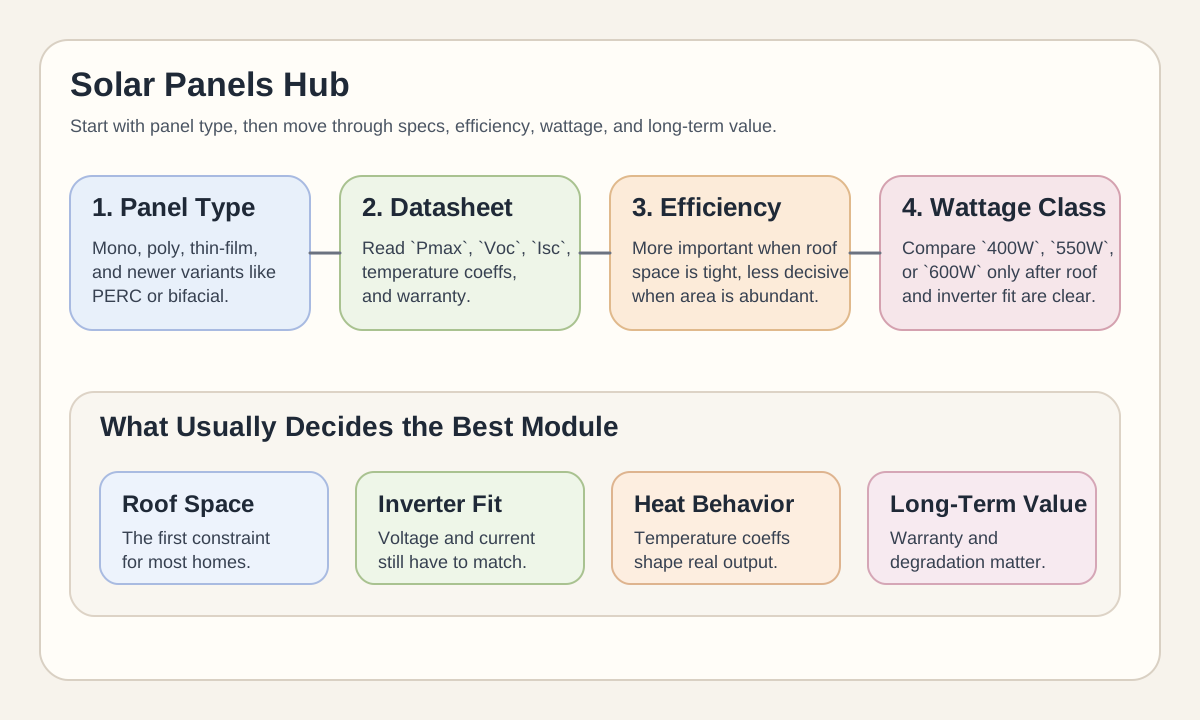
That is why smart panel selection usually follows this logic:
- pick the right panel category for the roof and project
- read the datasheet fields that matter
- compare efficiency, dimensions, and warranty
- then check how the panel fits the inverter and layout
The Main Solar Panel Types
Section titled “The Main Solar Panel Types”The first layer is type.
EnergySage, Aurora, and other mainstream guides all converge on the same broad families.
Monocrystalline Panels
Section titled “Monocrystalline Panels”This is the dominant modern residential choice.
Monocrystalline modules are usually chosen because they offer:
- higher efficiency
- better power density
- stronger performance when roof space is limited
That is why they show up so often in home systems and premium commercial rooftops.
Polycrystalline Panels
Section titled “Polycrystalline Panels”Polycrystalline panels used to be a much more common middle-ground option.
They generally offer:
- lower efficiency than monocrystalline
- lower upfront cost in some markets
- a better fit when roof area is abundant and the budget is more sensitive
They still matter conceptually, even though the market has shifted heavily toward mono.
Thin-Film Panels
Section titled “Thin-Film Panels”Thin-film modules are different enough that they should be treated as a separate category, not just a lower-efficiency version of crystalline silicon.
They can make sense when:
- flexibility matters
- weight matters
- the installation type is unusual
But for ordinary rooftop PV, crystalline panels still dominate most buyer decisions.
Newer Cell and Module Variants
Section titled “Newer Cell and Module Variants”Aurora’s guide is useful here because it reminds readers that modern panel shopping is not just mono vs poly anymore.
You also run into terms like:
PERCTOPCon- bifacial
- half-cut cells
These technologies can improve efficiency, temperature behavior, or module format, but the right way to treat them is as refinements inside the bigger panel families, not magic labels that replace datasheet reading.
What Really Matters After Type
Section titled “What Really Matters After Type”Once you know the rough panel family, the next layer is specifications.
The fields that usually matter most are:
PmaxVocIscVmpImp- temperature coefficients
- dimensions and weight
- degradation and warranty
That is where the buying decision starts to become real.
A module can sound excellent in marketing language and still be the wrong choice if:
- it does not fit the roof well
- it does not match the inverter well
- it runs poorly in heat
- it carries weaker long-term warranty expectations
Efficiency, Where Space Starts to Matter
Section titled “Efficiency, Where Space Starts to Matter”Efficiency matters most when roof area is constrained.
If the roof is small or broken up, higher-efficiency panels let you fit more total capacity into the same footprint.
If the roof is large and open, efficiency can matter less than installed $/W, temperature behavior, and long-term reliability.
That is why high efficiency is important, but not always decisive.
It is usually a roof-space variable first.
Wattage Classes, Where Bigger Is Not Automatically Better
Section titled “Wattage Classes, Where Bigger Is Not Automatically Better”This is one of the easiest traps in panel buying.
Higher wattage can reduce the number of modules needed, which may reduce:
- racking
- wiring
- labor
- balance-of-system cost
But the bigger module can also bring:
- more weight
- more awkward roof fit
- different current behavior
- extra compatibility checks on the inverter side
That is why comparing 550W and 600W panels, or any two wattage classes, has to include dimensions, electrical values, and roof layout, not just output.
Residential vs Commercial Panel Thinking
Section titled “Residential vs Commercial Panel Thinking”The panel logic changes with the project type.
For Homes
Section titled “For Homes”Residential buyers usually care most about:
- roof space efficiency
- clean roof fit
- shade behavior
- appearance
- long product and performance warranties
That is why monocrystalline, higher-efficiency modules tend to dominate residential recommendations.
For Commercial Roofs
Section titled “For Commercial Roofs”Commercial buyers often care more about:
- installed
$/W - module count reduction
- roof loading
- large-format handling
- long-term yield at scale
That is why larger module classes and broader cost optimization can make more sense on big, open roofs than they do on a cut-up home roof.
The Most Useful Questions to Ask Before Comparing Panels
Section titled “The Most Useful Questions to Ask Before Comparing Panels”If you want a short decision framework, these questions do most of the work.
- How much usable roof space is there?
- Is the roof simple or full of setbacks, vents, and awkward geometry?
- Is the site hot enough that temperature coefficient matters a lot?
- Is the inverter already selected, and does the module still fit electrically?
- Is the buyer optimizing for roof density, lowest cost, or longest-term output?
That is usually a much better starting point than asking which panel brand is best.
The Most Useful Subtopics in This Section
Section titled “The Most Useful Subtopics in This Section”The solar-panel section becomes easier to navigate if you think of it as four connected questions.
What type of panel fits the project
Section titled “What type of panel fits the project”That is where panel-family comparisons matter.
How do I read the numbers on the datasheet
Section titled “How do I read the numbers on the datasheet”That is where Pmax, Voc, Isc, temperature coefficients, and warranty logic matter.
How much does efficiency actually matter
Section titled “How much does efficiency actually matter”That is where roof-space constraints and performance-per-area start to matter more than raw wattage.
When does moving to a higher-wattage module actually help
Section titled “When does moving to a higher-wattage module actually help”That is where the 550W vs 600W style comparisons become useful.
Start Here If You Are Evaluating Real Quotes
Section titled “Start Here If You Are Evaluating Real Quotes”Use this reading order and most panel proposals start making more sense.
- Identify the module type and technology family.
- Read the panel datasheet before getting distracted by brochure claims.
- Compare efficiency and physical size together.
- Check degradation and warranty terms.
- Compare wattage classes only after the roof-fit and inverter-fit questions are clear.
That sequence usually saves people from the most common panel-buying mistake:
choosing the module that sounds biggest rather than the module that fits the system best.
Related Guides in This Section
Section titled “Related Guides in This Section”Watch or Read More
Section titled “Watch or Read More”Key Takeaways
Section titled “Key Takeaways”- Solar panel choice starts with type, but it should not end there.
- The specs that matter most are electrical fit, efficiency, thermal behavior, physical size, and long-term warranty.
- Monocrystalline panels dominate many residential projects because roof space is usually limited.
- Higher wattage can reduce module count, but it can also create roof-fit and inverter-fit problems.
- The best panel is usually the one that fits the roof and system cleanly, not just the one with the biggest label.
Sources Used for This Page
Section titled “Sources Used for This Page”- EnergySage, “Which Type of Solar Panel Should You Choose?”
- Aurora Solar, “Comprehensive Guide to Solar Panel Types”
- CHOICE, “How to buy the best solar panels for your home”
- SolarReviews, “How To Understand And Compare Solar Panel Specifications”