Buying Guide
How to Choose a Battery
Learn how to compare battery chemistry, usable capacity, power output, DoD, cycle life, and backup goals before choosing solar storage.
Choosing a battery is not only about buying the biggest kWh number you can afford. A good battery has to match the job you actually want it to do.
Some people want to store midday solar and use it at night. Some want backup during outages. Some are designing an off-grid system where the battery is no longer optional. Those are very different use cases, and the right battery for one can be the wrong battery for another.
That is why this guide starts with function first, then chemistry, then sizing, then buying criteria.
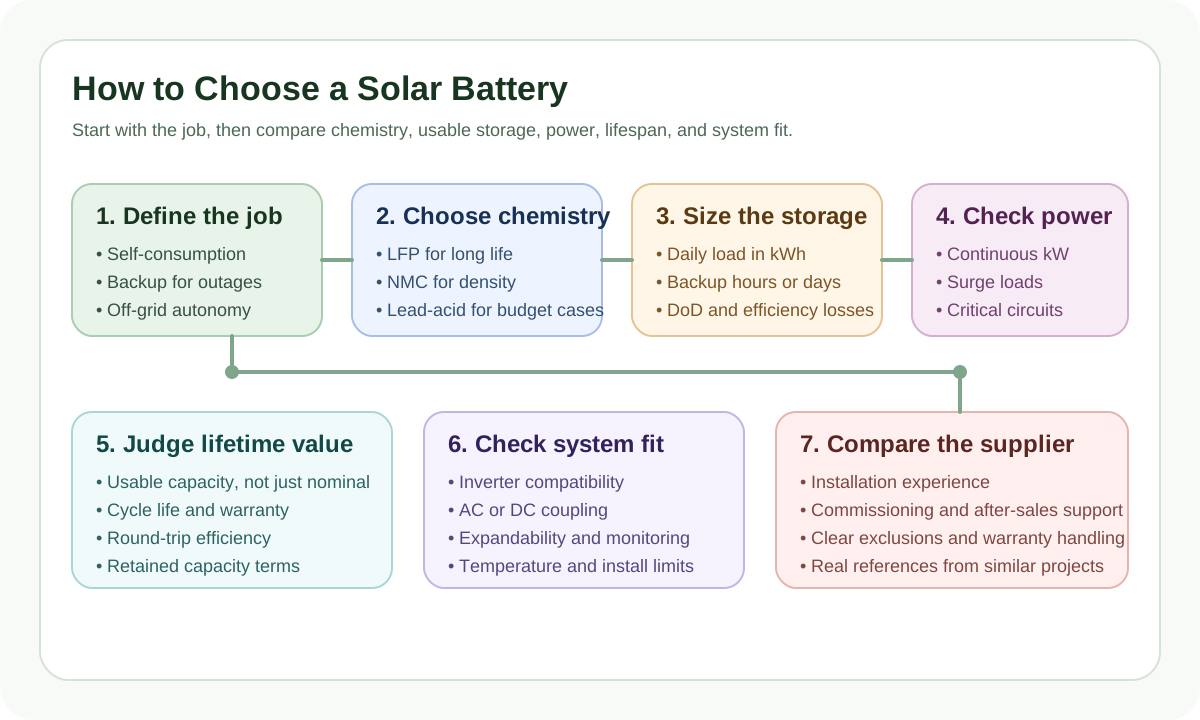
Start With the Job the Battery Needs to Do
Section titled “Start With the Job the Battery Needs to Do”Before comparing brands, answer these questions.
- Are you buying battery storage to increase solar self-consumption
- Are you mainly trying to keep essential loads running during blackouts
- Do you want whole-home backup or only backup for selected circuits
- Is this a grid-connected system or an off-grid one
- How much space, budget, and inverter compatibility do you actually have
This matters because the battery that works well for evening load shifting may be undersized for backup. A battery that is fine for short outages may be completely inadequate for two days of autonomy.
Government buyer guides and installer checklists tend to circle around the same core point. Capacity, peak power, warranty, cycle life, and system compatibility matter more than marketing language.
The Five Specs That Matter Most
Section titled “The Five Specs That Matter Most”If you want the fast version, these are the numbers worth caring about.
| Spec | What it tells you | Why it matters |
|---|---|---|
Nominal capacity, kWh | Total stored energy | Tells you the size of the battery on paper |
Usable capacity, kWh | Energy you can actually use | More important than nominal capacity in real life |
Continuous and peak power, kW | How much load the battery can support at once | Determines whether it can run heavy appliances or startup surges |
Depth of discharge, DoD | How much of the battery can be used safely | Higher DoD usually means more usable energy |
| Cycle life | How many charge-discharge cycles it can deliver before meaningful degradation | Helps judge long-term value |
Two batteries can both say 10 kWh on the label and still behave very differently. One might give you nearly all of that in daily use. Another might expose much less usable energy, or struggle with large surge loads.
That is why usable capacity is one of the best filtering metrics for buyers.
Battery Chemistry, the First Big Fork in the Road
Section titled “Battery Chemistry, the First Big Fork in the Road”Most residential and small commercial buyers today will end up comparing lithium-based batteries first. Lead-acid still exists, especially in lower-cost or legacy off-grid setups, but it is usually chosen because of budget or system history rather than because it is the strongest all-round option.
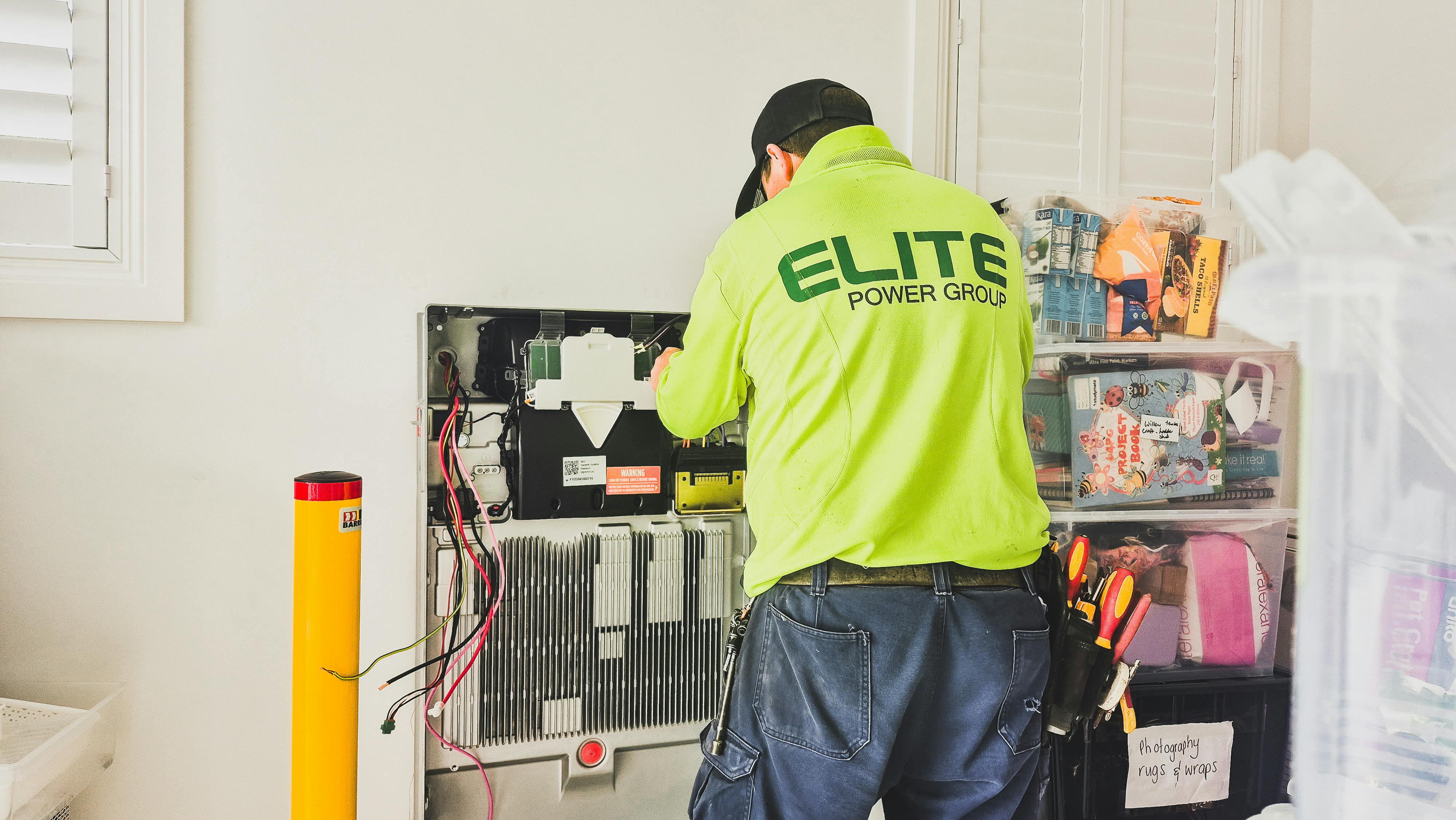
Home battery buying is really a storage-system decision, not just a chemistry label on a spec sheet. Photo by Elite Power Group on Pexels.
The main chemistry groups you will see are these.
| Chemistry | Typical role in solar storage | Main trade-off |
|---|---|---|
LFP, lithium iron phosphate | Fixed home storage, off-grid, backup systems | Lower energy density, but strong safety and long life |
NMC, nickel manganese cobalt | Some home batteries, EV-style storage, space-constrained installs | Higher energy density, but more thermal management sensitivity |
| Lead-acid, flooded or sealed | Budget systems, some older off-grid sites | Lower upfront cost, but lower DoD, shorter life, more maintenance or more constraints |
| Flow, saltwater, and other niche chemistries | Special applications | Usually less common for mainstream residential buying today |
If your question is simply which chemistry dominates modern home solar storage, the answer is usually LFP.
Lithium vs Lead-Acid
Section titled “Lithium vs Lead-Acid”This is still the most common first comparison.
Lead-acid batteries are familiar and can still make sense in some low-budget or legacy systems, especially where upfront cost matters more than footprint, usable depth, or long service life. But in most modern solar storage discussions, lithium wins on the metrics buyers actually feel over time.
Published comparisons regularly show the same pattern.
- Lithium batteries offer much higher energy density, so they store more energy in less space.
- Lithium batteries usually allow deeper discharge, which gives more usable energy from the same nominal capacity.
- Lithium batteries typically last far more cycles than lead-acid.
- Lithium batteries usually need less maintenance and hold voltage more consistently during use.
That is why lead-acid can look cheaper at the quote stage but become less attractive once you calculate total energy delivered over the life of the system.
If you want a deeper chemistry-only comparison, read Lithium vs Lead-Acid Batteries.
Inside Lithium, LFP vs NMC Is the Real Decision
Section titled “Inside Lithium, LFP vs NMC Is the Real Decision”Once you move past lead-acid, the more interesting comparison is LFP versus NMC.
| Factor | LFP | NMC |
|---|---|---|
| Cycle life | Usually longer | Usually shorter than LFP |
| Safety | Very strong thermal stability | Good, but depends more on thermal management |
DoD | Often 90 to 100 percent | Often around 80 to 90 percent |
| Energy density | Lower | Higher |
| Typical fit | Home storage, fixed solar batteries, off-grid | EVs, compact storage, space-constrained systems |
For most stationary solar storage, LFP has become the more comfortable answer because buyers value safety, long cycle life, and strong daily durability more than maximum compactness.
NMC still has advantages. If space is very tight, energy density matters. Some products also show very strong efficiency numbers. But for many fixed home battery systems, LFP lines up better with the use case.
That is why so many current home battery conversations eventually land here.
Not which lithium battery is best in the abstract.
But whether your site really needs the compactness edge of NMC, or whether the longer-life, fixed-storage profile of LFP is the smarter match.
Capacity Is Not the Same as Power
Section titled “Capacity Is Not the Same as Power”This is one of the easiest places to get confused.
Capacity tells you how much energy a battery can store over time. Power tells you how much energy it can deliver right now.
Think of it this way.
kWhanswers how longkWanswers how much at once
A battery with good capacity but weak power output may run lights and routers for a long time, but still struggle with pumps, ovens, air conditioning startup, or other surge-heavy loads.
That is why backup buyers should always look at both continuous power and peak power ratings, not just storage capacity.
Usable Capacity Is the Number That Feels Real
Section titled “Usable Capacity Is the Number That Feels Real”Nominal capacity is the headline. Usable capacity is the part you live with.
If a battery is rated at 10 kWh but the system only allows 90% DoD, the usable energy is closer to 9 kWh before system losses. Then round-trip efficiency and inverter losses reduce delivered energy further.
This is where many first-time battery comparisons become misleading. A bigger nominal number can hide a smaller usable result.
Why DoD and Cycle Life Matter So Much
Section titled “Why DoD and Cycle Life Matter So Much”Depth of discharge tells you how much of the battery can be used before recharging. A battery with higher allowable DoD gives you more accessible energy from the same nominal size.
But there is a second layer to this.
How deep you cycle the battery also affects how long it lasts.
Across lithium battery data and manufacturer guidance, the broad pattern is consistent. Shallower cycling usually extends cycle life. Deeper discharge puts more stress on the cells and tends to shorten service life over time.
That does not mean you should avoid using the battery. It means you should understand the trade-off.
- High
DoDgives more usable energy today - Lower average
DoDcan improve long-term cycle life - Warranty terms often define where the manufacturer expects that balance to sit
If you want to go deeper on this relationship, read Battery Cycle Life and Battery Sizing.
Round-Trip Efficiency Deserves a Quick Check
Section titled “Round-Trip Efficiency Deserves a Quick Check”Round-trip efficiency tells you how much energy you get back after charging and discharging the battery. If a battery stores 10 kWh and returns 9 kWh, the round-trip efficiency is about 90%.
That is not the most important spec on its own, but it matters when you are comparing systems meant for daily cycling. A battery that loses less energy in the charge-discharge loop will usually perform better for self-consumption and time-shifting.
How to Estimate Battery Size
Section titled “How to Estimate Battery Size”Sizing gets easier once you separate the question into three parts.
- How much energy do you use each day
- How many hours or days of backup do you want
- How much of the battery is actually usable after
DoDand efficiency losses
One common sizing formula is this.
Battery capacity (kWh) =Daily energy use (kWh) x autonomy days / (DoD x system efficiency)A simple example helps.
If a home needs 10 kWh of energy per day, wants 1 day of autonomy, assumes 80% DoD, and uses a system efficiency of 90%, the rough storage target looks like this.
10 / (0.8 x 0.9) = 13.9 kWhThat does not mean you must buy exactly that number. It means the system probably needs around 14 kWh of nominal storage to reliably deliver 10 kWh of usable daily backup under those assumptions.
If you want extra safety margin for weather, seasonal variation, or battery aging, size above the bare minimum.
A Practical Sizing Workflow
Section titled “A Practical Sizing Workflow”Use this order and the numbers usually become more believable.
- Pull recent electricity bills and estimate average daily consumption
- List the loads you want the battery to support during outages
- Decide whether you want hours of backup or one to three days of autonomy
- Apply
DoDand efficiency corrections instead of sizing from nominal capacity alone - Check whether the battery power rating can support your peak loads
- Confirm inverter and battery compatibility before you get attached to a product
That last step matters more than people expect. A battery can look perfect on paper and still be the wrong choice if it does not integrate cleanly with the inverter, backup panel, or monitoring platform.
Compatibility Is Not a Small Detail
Section titled “Compatibility Is Not a Small Detail”Battery buying is partly a chemistry question, but it is also a system integration question.
Check these before signing anything.
- Is the battery approved for your inverter or hybrid inverter
- Is the system AC-coupled or DC-coupled
- Does it support whole-home backup or only critical loads
- Can it be expanded later
- What ambient temperature range does the manufacturer specify
- What communication protocol and monitoring platform does it use
- Does the installer have real experience commissioning this battery with your inverter family
Many buyer guides mention brand reputation for a reason. The hardware spec sheet is only half the story. Firmware stability, warranty support, installer familiarity, and after-sales service all affect the ownership experience.
What to Ask About the Warranty
Section titled “What to Ask About the Warranty”Battery warranties are easy to skim and easy to misunderstand.
Look for these points.
- Warranty years
- Energy throughput limit if one exists
- Minimum retained capacity at the end of the warranty term
- Cycle assumptions behind the warranty
- Installation and operating conditions that can void coverage
- Labour and replacement handling, not just cell replacement on paper
The best warranty is not only the longest one. It is the one you can actually understand and use when something goes wrong.
Common Buying Mistakes
Section titled “Common Buying Mistakes”- Choosing by nominal
kWhalone and ignoring usable capacity - Ignoring
kWoutput and discovering too late that surge loads are not covered - Assuming every lithium battery behaves the same
- Underestimating
DoD, efficiency losses, and future degradation - Buying backup capacity without clearly defining which loads matter most
- Forgetting to check inverter compatibility and expansion limits
- Comparing quote totals without reading the warranty and support terms
This is where a lot of battery disappointment starts. Not because the battery was bad, but because the buyer and the job were mismatched from day one.
A Good Shortlist Framework
Section titled “A Good Shortlist Framework”If you are down to a few battery options, compare them in this order.
- Use case fit, self-consumption, backup, or off-grid
- Chemistry fit, usually
LFPorNMC - Usable capacity, not just nominal capacity
- Continuous and peak power
- Warranty, cycle life, and retained capacity terms
- Inverter compatibility and expandability
- Installer track record and support quality
Do that and most flashy but weak options fall away pretty quickly.
Watch or Read More
Section titled “Watch or Read More”Related Guides in Focus Solar
Section titled “Related Guides in Focus Solar”- Battery Sizing
- Battery Cycle Life
- Lithium vs Lead-Acid Batteries
- How to Choose a Solar System
- Questions to Ask a Supplier
- Battery Sizing Calculator
Key Takeaways
Section titled “Key Takeaways”- Start with the battery job first, self-consumption, blackout backup, or off-grid autonomy.
- Compare
usable capacity,kWoutput,DoD, cycle life, and warranty terms, not just nominalkWh. - Lithium usually beats lead-acid for modern solar storage, and
LFPis often the default choice for fixed home batteries. - Capacity and power are different. A battery can have enough energy but still fail to run the loads you care about.
- Sizing should account for autonomy target,
DoD, and efficiency losses before you compare products. - Compatibility with the inverter and installer support quality are part of the buying decision, not an afterthought.
Sources Used for This Page
Section titled “Sources Used for This Page”This page was expanded using the research notes and source list provided for this project, especially the following references.
- Aurora Solar, How to Choose the Best Solar Battery for Your Needs
- NSW Government, Choosing a Home Solar Battery
- Queensland Government, Choose the Best Solar Battery System for Your Home
- Infinity Renewables, How to Choose the Best Battery for a Solar Energy System
- FranklinWH, Calculating the Right Size Solar Battery for Your Needs
- EcoFlow, Solar Battery Storage Sizing Guide
- Anern, LiFePO4 vs. NMC, Which Lithium Battery Is Best for Solar?
- YouTube, The BEST Solar Battery in 2025, Top 4 Compared by Real Installers