Pricing & ROI
Off-Grid Solar System Cost
Learn what an off-grid solar system costs in 2025 and 2026, why batteries dominate the budget, and how small cabin setups differ from full-home independence.
Off-grid solar pricing confuses a lot of buyers because people are often talking about completely different systems while using the same words.
One person means a small cabin kit with a modest battery and a generator fallback. Another means a full-time home designed to survive winter, cloudy stretches, and heavy daily loads without any grid backup at all.
Those are not the same purchase.
This guide breaks down current off-grid cost ranges, explains why batteries and reliability margins dominate the budget, shows the difference between small, medium, and full-home systems, and compares off-grid pricing with grid-tied solar so the cost gap actually makes sense.
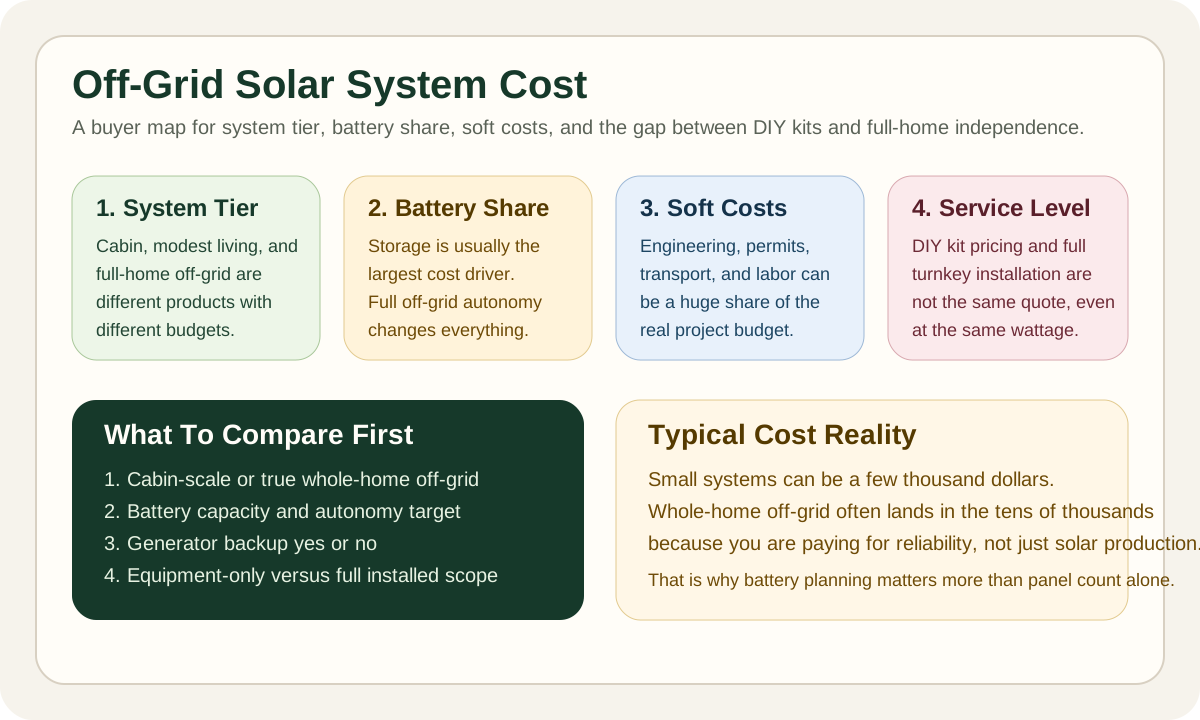
Quick Cost Snapshot
Section titled “Quick Cost Snapshot”The first thing to know is that whole-home off-grid pricing is usually far higher than people expect.
United States, Full Off-Grid Home Scale
Section titled “United States, Full Off-Grid Home Scale”This Old House’s 2026 off-grid cost guide puts a typical off-grid solar system around:
$45,000 to $65,000It also says that is more than double the cost of a standard grid-tied residential system.
SolaX’s 2026 off-grid guide lands in the same neighborhood and adds an important explanation: engineering, permits, logistics, and inspections can account for up to 40% of total project cost.
Smaller Off-Grid Systems
Section titled “Smaller Off-Grid Systems”At the same time, much smaller off-grid systems can cost dramatically less.
MindGardenPress’s 2025 off-grid system table gives these practical brackets:
800 Wto2 kW: about$1,800to$5,5003 kWto6 kW: about$6,000to$18,0008 kWto12 kW: about$20,000to$35,000+
These are useful planning ranges for cabins, tiny homes, and staged DIY systems. They are not the same thing as a turnkey full-home resilience build.
Equipment-Led Capacity Pricing
Section titled “Equipment-Led Capacity Pricing”Anker SOLIX’s 2026 off-grid cost table gives another useful lens based on system wattage:
4 kW: about$10,1006 kW: about$13,3908 kW: about$16,96010 kW: about$20,180
That is helpful for comparing hardware-led system sizing, but it should not be confused with a fully engineered, professionally installed, high-autonomy whole-home off-grid project.
Why Off-Grid Costs So Much More Than Grid-Tied
Section titled “Why Off-Grid Costs So Much More Than Grid-Tied”The short answer is simple.
Grid-tied solar is mostly about producing energy.
Off-grid solar is about producing energy, storing enough of it, managing it safely, and surviving bad weather without external support.
That means off-grid systems usually need:
- a larger battery bank
- a charge controller
- a more capable inverter or inverter-charger
- more conservative sizing
- backup generation in many serious installations
That is why several current comparisons still place grid-tied systems around roughly:
$15,000 to $30,000while fully off-grid systems are often framed more like:
$50,000 to $80,000+The array is only part of the story. Reliability is what pushes the budget up.
The Two Cost Languages Buyers Need To Separate
Section titled “The Two Cost Languages Buyers Need To Separate”If you remember one thing from this page, make it this.
There are really two common ways people talk about off-grid cost.
1. Kit or Equipment Cost
Section titled “1. Kit or Equipment Cost”This is the hardware-centered view:
- panels
- inverter
- charge controller
- a battery bank
- basic balance-of-system parts
This is the language most often used in DIY tables and capacity-based comparisons.
2. Reliable Whole-System Cost
Section titled “2. Reliable Whole-System Cost”This is the real independence view:
- enough battery for the target autonomy
- enough solar for the worst meaningful season
- engineering and design
- permits and inspections
- transport and logistics
- backup generator or redundancy
- labor and commissioning
This is why a wattage-based table can say 10 kW costs about $20,180, while a whole-home off-grid guide can say the real project budget is more like $45,000 to $65,000 or even higher.
Both can be “true.” They are just answering different questions.
Small, Medium, and Large Off-Grid Systems
Section titled “Small, Medium, and Large Off-Grid Systems”One of the clearest ways to think about off-grid cost is by use case.
Small System: Cabin, Shed, Weekend Use
Section titled “Small System: Cabin, Shed, Weekend Use”Typical bracket:
$1,800 to $5,500Typical daily power:
400 to 1,200 Wh/dayThis class is often enough for:
- lights
- device charging
- a small fridge
- router or communications gear
- light seasonal cabin use
These systems usually stay affordable because the load is disciplined.
Medium System: Tiny Home or Frugal Full-Time Use
Section titled “Medium System: Tiny Home or Frugal Full-Time Use”Typical bracket:
$6,000 to $18,000Typical daily power:
3 to 7 kWh/dayThis is where off-grid starts to feel like real daily living, but only if loads are still managed carefully.
Large System: Full Off-Grid Home
Section titled “Large System: Full Off-Grid Home”Typical bracket:
$20,000 to $35,000+for a system-centered equipment budget, and often much more once full-home installation, autonomy, and resilience are priced properly.
This is the tier where buyers most often underestimate battery, generator, and soft-cost requirements.
What Is Actually Included in an Off-Grid System
Section titled “What Is Actually Included in an Off-Grid System”A real off-grid system usually includes four core hardware categories:
- solar panels
- charge controller
- inverter
- battery bank
That core definition is consistent across technical off-grid references.
A more complete installed system may also include:
- racking and mounting
- disconnects and breakers
- cabling and connectors
- monitoring
- generator integration
- battery enclosure or thermal management
- grounding and surge protection
This is why “just tell me the solar panel cost” is rarely the right question for off-grid buyers.
Component Cost Breakdown
Section titled “Component Cost Breakdown”One of the better current component tables comes from Anker SOLIX. Its 2026 ranges put major items roughly in these brackets:
- solar panels:
$3,500to$35,000 - charge controller:
$140to$500 - inverter:
$3,000to$13,000 - battery bank:
$2,000to$16,000
ShopSolarKits and other kit-focused sources reinforce the same pattern: the panel cost is visible, but batteries, inverter quality, and control hardware are what usually determine whether the system feels cheap or expensive.
Battery Cost Is the Real Story
Section titled “Battery Cost Is the Real Story”For most serious off-grid systems, the battery bank is the budget headline.
EnergySage’s 2026 battery-cost guide says:
- a battery around
11.4 kWhaverages roughly$9,041 - whole-home backup can cost around
$34,000 - fully off-grid battery needs can push above
$115,000
That last figure shocks people, but it explains why “going fully off-grid” is often not a casual upgrade. It is a deep storage problem as much as a solar problem.
Broader storage references also commonly place lithium battery pricing around:
$200 to $400 per kWhThat is one reason off-grid economics change so fast as autonomy days increase.
UK Battery Pricing Is a Useful Reality Check
Section titled “UK Battery Pricing Is a Useful Reality Check”Even though full off-grid UK home guidance is less standardized, UK battery tables are still useful because they show how expensive storage becomes once capacity rises.
Checkatrade’s current battery-cost guide lists rough installed battery pricing like this:
4 kWh:£4,0005 kWh:£5,0008 kWh:£7,00010 kWh:£8,00016 kWh:£12,000
That does not make a full UK off-grid budget by itself, but it gives a clear sense of why storage dominates serious energy independence builds in any market.
Soft Costs and Hidden Costs
Section titled “Soft Costs and Hidden Costs”Hardware is only part of the budget.
SolaX’s 2026 guide is especially useful here because it explicitly says engineering, permits, transportation, and inspections can account for up to 40% of total project cost.
That is a big reason why off-grid buyers see such a large gap between:
- DIY hardware estimates
- kit pricing
- full-service installer quotes
The hidden costs often include:
- engineering and design
- permitting
- transport and site logistics
- generator integration
- trenching or ground-mount work
- labor
- future battery replacement
DIY vs Professional Installation
Section titled “DIY vs Professional Installation”This is where buyer expectations often break.
A Reddit cabin case study shows the spread clearly. In that discussion, the poster said Unbound Solar recommended a roughly $10,000 kit for panels and inverter, plus about $7,000 in lithium batteries, while a full-service installer quoted about $60,000 installed for the project.
That does not mean one side is “lying.” It means the buyer is seeing two different products:
- parts and kit scope
- full design, labor, liability, and installation scope
If you are comparing DIY and turnkey pricing, compare them as different service levels, not as though they were the same offer.
Off-Grid vs Grid-Tied: The Cost Trade-Off
Section titled “Off-Grid vs Grid-Tied: The Cost Trade-Off”Off-grid systems cost more because they have to replace the grid, not just offset it.
Grid-tied systems usually let you:
- buy less battery
- use a simpler inverter architecture
- rely on the utility during bad solar periods
- capture better economics in incentive-heavy markets
Off-grid systems usually require:
- more storage
- more robust inverter capability
- a stronger backup plan
- more conservative sizing assumptions
That is why off-grid usually wins on independence, not on cheapest cost per kilowatt-hour.
A Practical Example of Cost Layering
Section titled “A Practical Example of Cost Layering”Take a full-home off-grid design conversation around 10 kW.
One source may show:
10 kW system = about $20,180Another source may show:
whole off-grid home = about $45,000 to $65,000The missing layers are usually:
- larger battery bank
- more real-world autonomy
- inverter-charger and controls
- labor
- permitting and logistics
- backup generator and redundancy
That is the gap buyers need to understand before treating any one number as final.
Is Off-Grid Solar Good Value?
Section titled “Is Off-Grid Solar Good Value?”That depends on what problem you are trying to solve.
If your goal is lowest-cost bill reduction, grid-tied solar usually wins.
If your goal is resilience, remote living, or total energy independence, off-grid can absolutely make sense, but the value case has to be framed around reliability, not just payback.
In many real projects, the smartest financial compromise is not “fully off-grid at all costs.”
It is one of these:
- a smaller off-grid system with disciplined loads
- an off-grid system paired with generator backup
- a hybrid system instead of a pure off-grid build
Common Pricing Mistakes Buyers Make
Section titled “Common Pricing Mistakes Buyers Make”- Comparing cabin-system pricing to whole-home off-grid pricing
- Looking at panel cost first instead of battery cost
- Underestimating autonomy days and winter performance needs
- Assuming kit pricing includes full engineering and installation
- Ignoring future battery replacement
- Treating price-per-watt as the main metric when storage dominates the economics
A Good Default Comparison Framework
Section titled “A Good Default Comparison Framework”Use this order and off-grid pricing becomes much easier to interpret.
- Define whether the system is cabin-scale, moderate daily living, or full-home off-grid
- Separate equipment cost from fully installed project cost
- Check how much battery storage is actually included
- Check whether generator backup is assumed
- Review soft-cost scope such as logistics, permits, and engineering
- Compare reliability target, not just array size
That keeps you from comparing unlike-for-like offers.
Related Guides in Focus Solar
Section titled “Related Guides in Focus Solar”- Off-Grid Buying Guide
- How to Choose a Battery
- Battery Sizing
- Load Estimation
- System Voltage Selection
Watch or Read More
Section titled “Watch or Read More”Key Takeaways
Section titled “Key Takeaways”- Full-home off-grid systems commonly land around
$45,000to$65,000, and in some comparisons even higher, because they must replace both the grid connection and the backup function of the grid. - Smaller cabin and modest-use off-grid systems can cost far less, which is why off-grid pricing varies so widely online.
- Battery storage is usually the single biggest cost driver, not the panels.
- Soft costs such as engineering, permits, transportation, and installation can account for a large share of the real project budget.
- The most useful first distinction is not
kW. It is whether you are pricing a small off-grid setup or true whole-home independence.
Sources Used for This Page
Section titled “Sources Used for This Page”This page was expanded using current cost references and direct verification of the most time-sensitive pricing points, especially the following sources.
- This Old House, Off-Grid Solar System Cost Guide
- SolaX Power, Off-Grid Solar Systems Meaning, Components and Cost
- MindGardenPress, Off-Grid Living Costs 2025
- Anker SOLIX, Off-Grid Solar System Cost
- Anern, Grid-Tied vs Off-Grid Cost-Benefit Analysis
- EnergySage, How Much Do Batteries Cost in 2026?
- Checkatrade, Solar Battery Storage System Cost
- Reddit, Off-Grid Cabin Solar Cost Discussion
- YouTube, Why Is Off-Grid Solar More Expensive Than Grid-Tie Solar?