Components
Batteries
A hub page covering solar battery types, chemistry differences, key specifications, and how battery sizing works in real solar storage systems.
Battery storage is the part of a solar system that turns daytime generation into nighttime usefulness.
It is what lets a home keep using solar after sunset, ride through outages, and reduce dependence on the grid. It is also one of the easiest parts of a system to misunderstand, because battery decisions are shaped by chemistry, usable capacity, lifetime, temperature, and sizing logic all at once.
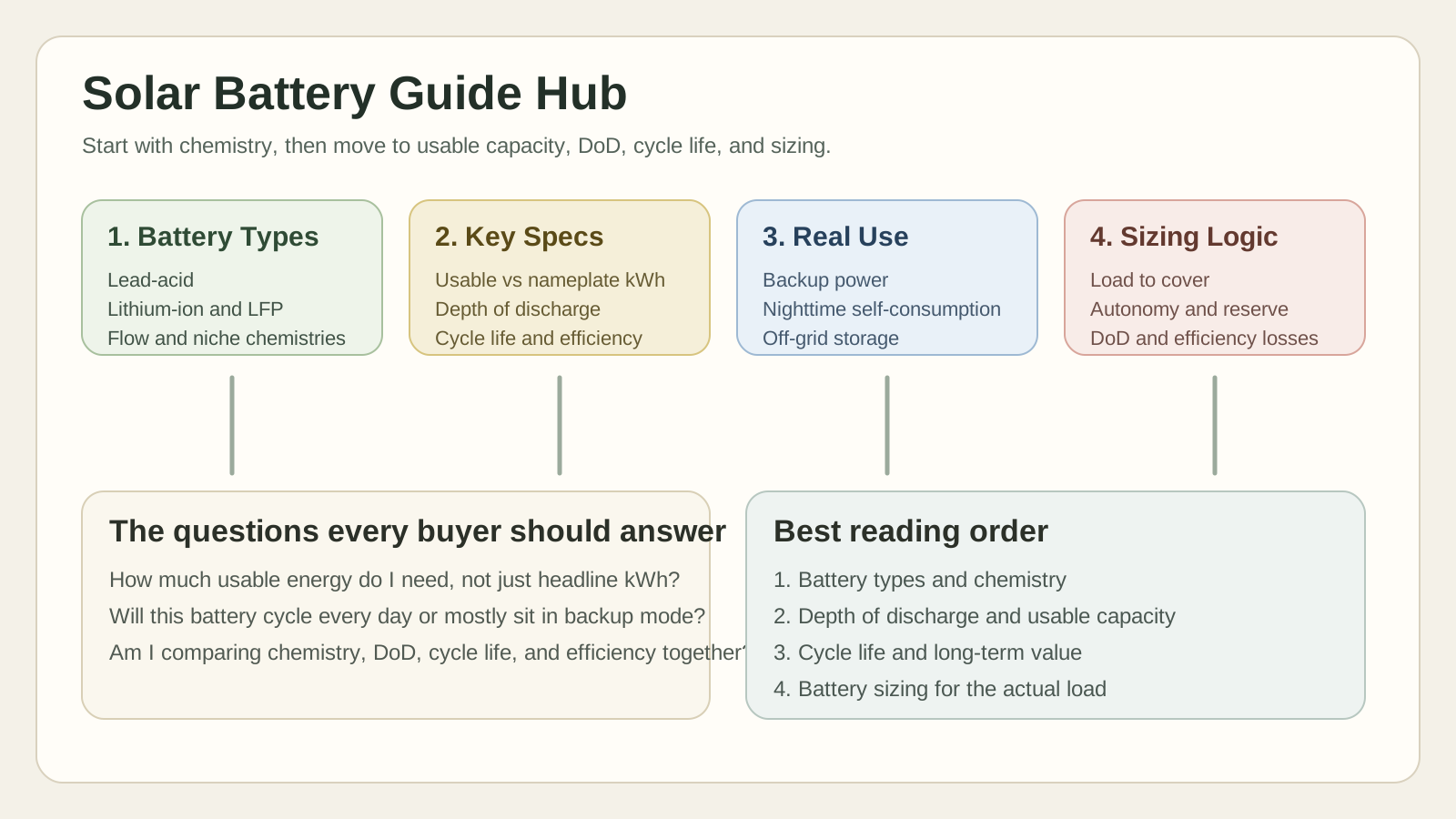
This hub page gives you the big picture first, then points you to the pages where each topic is explained in more detail.
Why Batteries Matter in a Solar System
Section titled “Why Batteries Matter in a Solar System”Solar panels generate electricity when the sun is available. Batteries let you shift some of that energy into a different time window.
That changes what a solar system can actually do:
- cover evening and overnight loads
- provide backup during outages
- increase self-consumption of solar generation
- reduce dependence on grid import or generator runtime
For some homes, batteries are mainly a resilience upgrade. For others, especially off-grid systems, they are the part that makes the whole system workable at all.
The Main Battery Types Used in Solar Storage
Section titled “The Main Battery Types Used in Solar Storage”EnergySage and Solar.com both group solar batteries by chemistry, because chemistry is still the clearest way to understand how a battery will behave in the real world.
Lead-Acid
Section titled “Lead-Acid”Lead-acid batteries are older, cheaper upfront, and still relevant in cost-sensitive systems or legacy off-grid setups.
Their trade-off is that they usually offer:
- lower recommended
DoD - shorter cycle life
- more maintenance or stricter operating constraints
That is why they can look affordable at purchase time but less attractive over a long service life.
Lithium-Ion
Section titled “Lithium-Ion”Lithium-ion is the dominant family in modern residential storage because it offers:
- higher usable capacity
- higher cycle life than lead-acid
- lower maintenance
- better everyday user experience
But “lithium-ion” is still a broad category, not a single battery type.
LFP or lithium iron phosphate is one of the most important chemistries to understand in solar storage.
It is widely used in home batteries because it balances:
- strong cycle life
- good everyday
DoD - high safety for stationary storage
That is one reason LFP has become a default recommendation in many solar battery buying guides.
Flow Batteries
Section titled “Flow Batteries”Flow batteries are real solar storage batteries, but they are not common in ordinary homes.
They are more often discussed in:
- larger commercial systems
- long-duration storage applications
- projects where cycle durability and scaling behavior matter more than compact size
For most residential buyers, they are a niche rather than the first option.
Other Niche Chemistries
Section titled “Other Niche Chemistries”Solar.com also notes niche categories such as saltwater and nickel-cadmium.
These are useful to know about, but they are far less common in mainstream home solar buying than lead-acid, lithium-ion, and especially LFP.
The Specs That Matter Most
Section titled “The Specs That Matter Most”If you are trying to make sense of solar batteries, these are the specifications worth learning first.
Nameplate Capacity vs Usable Capacity
Section titled “Nameplate Capacity vs Usable Capacity”A battery may be sold with a headline capacity such as 10 kWh, but that does not always mean you can use all 10 kWh in normal operation.
Usable capacity depends on the manufacturer’s permitted DoD, reserve settings, and system controls.
That is why “usable kWh” is often a more practical buying metric than nameplate kWh.
Depth of Discharge
Section titled “Depth of Discharge”DoD tells you how much of the battery’s stored energy can be routinely discharged.
That matters because:
- it changes usable capacity
- it changes how much nameplate storage you need
- it often changes cycle life
If a battery has 10 kWh of nameplate capacity and allows 80% DoD, then the rough usable energy is:
10 kWh x 0.80 = 8 kWhCycle Life
Section titled “Cycle Life”Cycle life tells you how many charge-and-discharge cycles a battery can complete before it falls to a defined end-of-life threshold, often 80% of original capacity.
This matters because a battery is not just a box of stored energy. It is a box of stored energy that will be used repeatedly for years.
That is why two batteries with the same headline capacity can have very different long-term value.
Round-Trip Efficiency
Section titled “Round-Trip Efficiency”Round-trip efficiency tells you how much energy you get back compared with what went into the battery.
Higher efficiency means:
- less energy lost in storage
- lower effective cost per delivered
kWh - better real-world system performance
Temperature and Maintenance
Section titled “Temperature and Maintenance”Batteries are not chemistry-only decisions. Operating environment matters too.
Temperature affects:
- usable capacity
- charging behavior
- degradation rate
- lifetime consistency
Maintenance expectations matter as well, especially when comparing modern lithium systems with older lead-acid setups.
Why Chemistry Alone Is Not Enough
Section titled “Why Chemistry Alone Is Not Enough”It is tempting to ask which battery chemistry is “best,” but that question is too broad on its own.
A better framework is:
- Identify the chemistry.
- Check the usable capacity and
DoD. - Check cycle life and warranty structure.
- Check efficiency and operating temperature range.
- Compare the battery against the actual job it needs to do.
That last step matters the most.
The best battery for a lightly used backup system is not always the same as the best battery for a daily-cycling self-consumption system or an off-grid cabin.
How Battery Sizing Works in Practice
Section titled “How Battery Sizing Works in Practice”Battery sizing is usually driven by energy demand, not by battery marketing labels.
The practical starting point is:
- how much energy must be covered
- for how long
- under what level of backup or autonomy
Most sizing workflows then adjust for:
DoD- efficiency losses
- system voltage
- reserve margin
- future expansion
A simplified way to think about it is:
Required nameplate battery capacity = energy demand / allowed DoDSo if you need 6 kWh of usable energy and plan around 80% DoD, the rough nameplate requirement starts at:
6 / 0.80 = 7.5 kWhThat number still needs to be refined for efficiency losses and safety margin, but it shows why sizing cannot be done from nameplate kWh alone.
A Simple Way to Navigate Battery Decisions
Section titled “A Simple Way to Navigate Battery Decisions”If you are new to storage, this is the cleanest reading order.
- Start with battery types and chemistry.
- Learn what
DoDdoes to usable capacity. - Learn what cycle life does to long-term value.
- Then size the battery for the actual load you need to cover.
That sequence makes the later buying and sizing pages much easier to understand.
Start With These Battery Guides
Section titled “Start With These Battery Guides”Related Buying and Design Guides
Section titled “Related Buying and Design Guides”- How to Choose a Battery
- Off-Grid Buying Guide
- Battery Sizing
- Load Estimation
- System Voltage Selection
Read More From External Sources
Section titled “Read More From External Sources”Key Takeaways
Section titled “Key Takeaways”- Solar batteries should be compared by chemistry, usable capacity,
DoD, cycle life, and efficiency together. LFPis popular in modern solar storage because it balances safety, usable capacity, and long cycle life.- Lead-acid can still make sense in some low-cost systems, but it usually trades lower upfront price for lower usable capacity and shorter lifetime.
- Battery sizing is not just choosing a
kWhnumber. It depends on load, autonomy,DoD, efficiency, and system design. - The best way to use this hub is to move from chemistry to
DoDto cycle life to sizing in that order.
Sources Used for This Page
Section titled “Sources Used for This Page”- EnergySage, Types of Solar Batteries: What Sets Them Apart?
- Solar.com, Types of Solar Batteries in 2026
- SolarReviews, What Are the Different Types of Solar Batteries?
- EcoFlow, Types of Solar Batteries for Solar Power Storage
- SolaX Power, Lithium vs Lead-Acid vs Flow
- Unbound Solar, Solar Battery Bank Sizing Calculator for Off-Grid
- Enexer, Solar Battery Bank Sizing Guide 2026
- Felicity ESS, How To Calculate Battery Capacity Of Solar Energy System
- Sol-Ark, What’s the Best Battery Chemistry for Your Solar System?