Components
Hybrid Inverter Explained
Learn what a hybrid inverter does, how it manages solar, battery, loads, and the grid together, and when it is the right inverter choice.
The easiest way to understand a hybrid inverter is this:
it is not just an inverter that happens to allow a battery.
It is an inverter that is built around power-flow decisions.
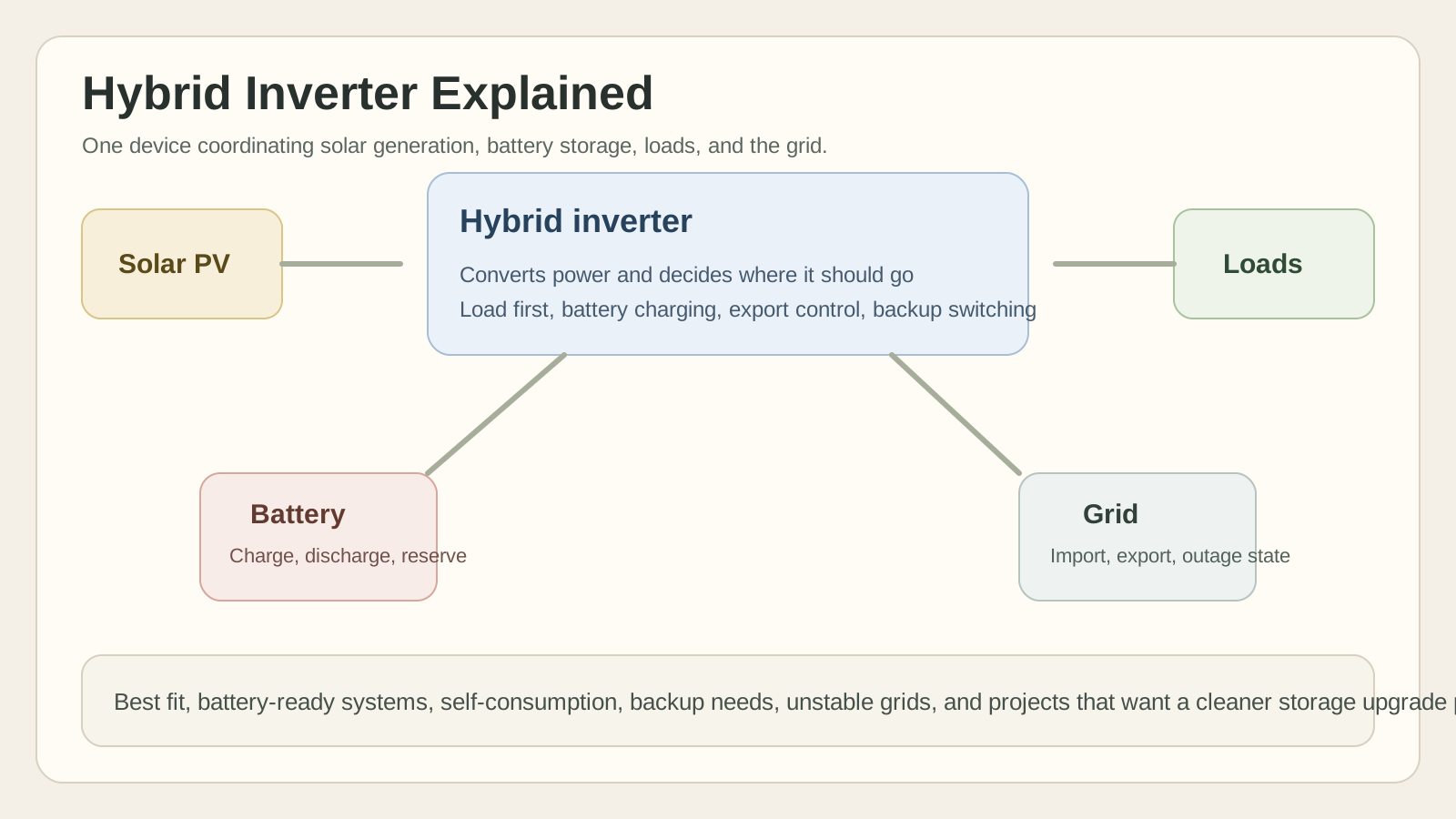
Solar comes in, loads need electricity, the battery may need charging, the grid may be available, and sometimes the grid disappears completely. A hybrid inverter is designed to manage that whole situation from one main box.
That is why the real question is not just:
can it connect to storage?
It is:
can it decide where the energy should go, at the right time, under the right rules?
This guide explains what a hybrid inverter is, how it works, how it differs from a standard inverter, and when it is worth choosing one even if you are not installing a battery on day one.
What a Hybrid Inverter Actually Is
Section titled “What a Hybrid Inverter Actually Is”Several of the clearest manufacturer guides land on the same definition.
FSP, LiTime, Hoymiles, and Sunriver all describe a hybrid inverter as a device that combines:
- solar inverter functions
- battery charging and discharge management
- grid interaction logic
- load support and, in many systems, backup behavior
That is the useful definition, because it describes the job instead of just the label.
A hybrid inverter is not only converting electricity.
It is deciding how electricity moves through the system.
Why It Exists
Section titled “Why It Exists”A normal string inverter makes sense when the job is straightforward.
Panels generate DC, the inverter converts it to AC, the home uses what it can, and the rest can go to the grid if export is allowed.
But the moment a battery enters the picture, the problem gets more complicated.
Now the system has to answer questions like:
- should solar power feed the house first or charge the battery first?
- when should the battery discharge?
- should the system export to the grid or hold energy back?
- what happens when the grid goes down?
- which loads should stay alive during backup mode?
That is why hybrid inverters exist.
They are built for a more complicated energy conversation.
How a Hybrid Inverter Manages Power Flow
Section titled “How a Hybrid Inverter Manages Power Flow”This is the part that matters most.
The real value of a hybrid inverter is power-flow management.
Ornate Solar and Sunriver both describe this clearly in different words, and the core idea is the same:
the inverter monitors generation, battery state, grid status, and load demand, then routes energy according to system priorities.
In a typical self-consumption setup, the logic often looks like this:
- Solar power supplies active household or business loads first.
- Extra solar charges the battery.
- Additional surplus is exported, limited, or curtailed depending on the grid rules.
- Later, when solar output drops, the battery can support the loads before the site imports from the grid.
That is a much more active role than a simple grid-tied inverter usually plays.
What Happens When the Grid Is Available
Section titled “What Happens When the Grid Is Available”Under normal grid-connected conditions, a hybrid inverter usually behaves like a smart traffic controller.
It may:
- run the site from live solar generation
- store excess energy in the battery
- export surplus to the grid
- reduce import during expensive tariff periods
This is why hybrid inverters are often chosen for users who care about:
- self-consumption
- time-of-use shifting
- peak shaving
- keeping more of their solar generation on-site
So even when the grid is healthy, the hybrid inverter is doing much more than a simple DC-to-AC conversion job.
What Happens When the Grid Fails
Section titled “What Happens When the Grid Fails”This is where many people suddenly understand why the word hybrid matters.
Valsa and Sunriver both note that hybrid inverters can operate in backup-oriented modes when the grid is unavailable, provided the system is designed for that use case and the critical loads are wired correctly.
That means a hybrid inverter may be able to:
- isolate from the grid
- continue powering essential loads
- use battery energy to keep those loads alive
- keep using available solar generation during the outage
This is very different from a standard grid-tied inverter that simply shuts down with the grid and waits.
Some systems switch quickly enough that backup feels nearly seamless for the protected circuits, though real switching behavior still depends on the model, system design, and the load panel arrangement.
Why It Is Not Just a Standard Inverter With Extra Features
Section titled “Why It Is Not Just a Standard Inverter With Extra Features”This is an important distinction.
A string inverter is usually optimized around one main job:
convert solar DC into usable AC.
A hybrid inverter is built around a broader system architecture.
It has to understand:
- solar production
- battery charge and discharge
- backup priority
- export behavior
- grid rules
- load support logic
That is why calling a hybrid inverter just an upgraded inverter is a little too small.
It is closer to the control center of a solar-plus-storage system.
Hybrid Inverter vs Normal Inverter
Section titled “Hybrid Inverter vs Normal Inverter”SRNE’s comparison is useful because it puts the difference in plain application terms.
A normal inverter is enough when:
- there is no battery
- there is no serious backup requirement
- the job is mainly solar conversion and export
A hybrid inverter becomes much more attractive when:
- the system includes storage now
- the owner expects to add storage later
- backup is important
- the goal is to reduce grid dependence in a more active way
So the practical distinction is not just technical.
It is strategic.
What kind of solar system are you really building?
Why Hybrid Inverters Are Popular in Battery-Ready Systems
Section titled “Why Hybrid Inverters Are Popular in Battery-Ready Systems”This is probably the strongest buying argument.
If someone already knows a battery is coming, the case for a hybrid inverter is usually straightforward.
But even if the battery is not being installed immediately, hybrid inverters are often chosen because they preserve a cleaner upgrade path.
That can be valuable for users who think:
- I do not want a battery this year
- but I probably will want one later
- and I do not want to redesign the whole inverter side when that happens
That is why many installers treat hybrid inverters as a storage-friendly default where budget and project goals support it.
The Main Use Cases Where Hybrid Inverters Make Sense
Section titled “The Main Use Cases Where Hybrid Inverters Make Sense”Hybrid inverters are especially attractive in systems that want to do more than simple net export.
Homes Adding a Battery
Section titled “Homes Adding a Battery”This is the most obvious case.
If the project includes battery storage from the beginning, a hybrid inverter is often the cleanest architecture.
Homes Planning a Battery Later
Section titled “Homes Planning a Battery Later”This is one of the most practical future-proofing cases.
If the owner expects to add storage later, choosing a hybrid inverter early may reduce upgrade friction later.
Sites With Weak or Unstable Grids
Section titled “Sites With Weak or Unstable Grids”If outages are common or grid quality is poor, backup capability becomes much more valuable.
That makes hybrid inverters especially relevant in:
- rural areas
- remote properties
- regions with unstable utility supply
Small Commercial Systems
Section titled “Small Commercial Systems”Small commercial and mixed-use sites may also benefit when they care about:
- demand management
- resilience
- solar self-consumption
- battery-backed continuity for critical loads
DC-Coupled vs AC-Coupled Thinking
Section titled “DC-Coupled vs AC-Coupled Thinking”One of the questions buyers often run into is whether the hybrid inverter supports DC-coupled or AC-coupled storage designs.
You do not need a full engineering lecture to understand why this matters.
What matters is that the storage architecture affects:
- conversion losses
- upgrade flexibility
- retrofit complexity
- how naturally the battery integrates with the inverter
That is why the coupling approach should be checked early, not after the rest of the proposal is already assumed to be fixed.
The Specs You Should Check Before Buying One
Section titled “The Specs You Should Check Before Buying One”If you are evaluating a hybrid inverter, the spec check should go beyond basic output power.
The most useful checklist usually includes:
- single-phase or three-phase support
DC-coupledorAC-coupledcompatibility- backup or emergency output capability
- battery compatibility list
- grid-code compliance
- export limitation support
- number of
MPPTtrackers - charge and discharge power limits
This is where many readers realize a hybrid inverter is not just a yes-or-no battery question.
It is a system-integration question.
The Backup Question Buyers Often Miss
Section titled “The Backup Question Buyers Often Miss”One of the most common misunderstandings is assuming:
hybrid inverter equals whole-home backup.
Not necessarily.
Backup behavior depends on:
- whether the inverter has backup output hardware
- how the critical loads are wired
- how much battery power is available
- which loads are actually protected
So when someone says they want a hybrid inverter for outage resilience, the real follow-up question is:
which loads need to stay on?
That is usually the better design starting point.
When a Hybrid Inverter Is Probably the Right Choice
Section titled “When a Hybrid Inverter Is Probably the Right Choice”A hybrid inverter is usually a strong fit when the buyer wants one or more of these outcomes:
- install battery storage now
- preserve a clear battery-upgrade path later
- increase self-consumption
- reduce grid imports at strategic times
- keep critical loads alive during outages
- build a more flexible solar-plus-storage architecture
In other words, it is the right choice when the system needs to think, not just convert.
When It May Be More Than You Need
Section titled “When It May Be More Than You Need”A hybrid inverter is not automatically the best answer for every project.
If the system is:
- simple
- grid-tied only
- not planning battery storage
- not concerned with backup
then a normal string inverter may still be the more sensible and economical choice.
That is why the right buying question is not:
is hybrid better?
It is:
better for what kind of system?
A Good Rule of Thumb
Section titled “A Good Rule of Thumb”If the project includes a battery, or you strongly suspect it will include a battery later, hybrid deserves to be the default starting point.
If the project is a straightforward grid-tied solar installation with no meaningful storage or backup goal, a standard inverter may still be the cleaner answer.
That rule will not solve every edge case, but it will get most buyers pointed in the right direction.
Related Guides in Focus Solar
Section titled “Related Guides in Focus Solar”- Inverters Hub
- String vs Microinverter
- How to Read an Inverter Datasheet
- How to Choose an Inverter
- Inverter Sizing
Read More From External Sources
Section titled “Read More From External Sources”Key Takeaways
Section titled “Key Takeaways”- A hybrid inverter combines solar conversion with battery and power-flow management in one main device.
- Its value is not just battery compatibility. Its value is coordinated control of
PV, storage, loads, and grid behavior. - Hybrid inverters are especially useful in battery-ready, backup-focused, or self-consumption-focused systems.
- They are often the smarter architecture when storage is planned now or later.
- A standard inverter can still be the better choice for simple grid-tied systems without serious storage or backup goals.
Sources Used for This Page
Section titled “Sources Used for This Page”- FSP Group, Solar Hybrid Inverter Guide: Functions, Types and Off-Grid Benefits
- Hoymiles, What is a hybrid inverter?
- LiTime, What is a hybrid inverter? Advantages and Areas of application
- Sunriver, Hybrid Inverter Basics: Definition, Work Modes, and Datasheets
- Valsa Engineering, How Does a Hybrid Inverter Work?
- SRNE Solar, Hybrid Inverter VS Normal Inverter, Which One Is Better?
- Penn State AE 868, Interpreting inverter datasheet and main parameters