Components
Monocrystalline vs Polycrystalline Panels
Compare monocrystalline and polycrystalline solar panels on efficiency, cost, temperature behavior, appearance, and where each still makes sense.
If you are comparing solar panels in 2026, the short answer is pretty clear.
Monocrystalline panels are the modern default.
Not because polycrystalline panels suddenly stopped working, but because monocrystalline technology kept improving while the cost gap kept shrinking.
That means most new residential installs, and a lot of commercial ones too, now start from a mono-first assumption.
Still, that does not make polycrystalline meaningless.
It just means the question has changed from:
which one is better in theory?
to:
is there still a real situation where poly makes more sense than mono?
This guide walks through that comparison honestly, with the focus on efficiency, cost, temperature behavior, appearance, and the kinds of projects where the difference still matters.
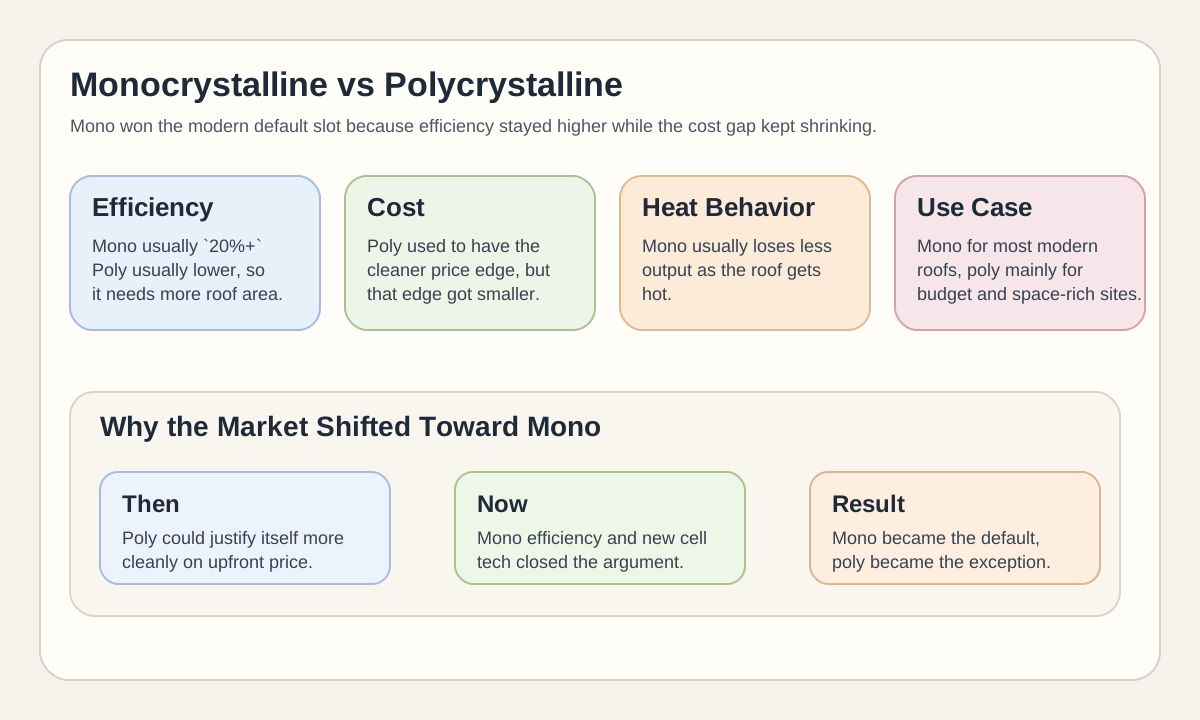
The Core Difference Starts With the Silicon
Section titled “The Core Difference Starts With the Silicon”Monocrystalline panels are made from a single crystal structure.
Polycrystalline panels are made from multiple silicon crystal fragments fused together.
That manufacturing difference shows up in the real buying questions:
- efficiency
- appearance
- heat behavior
- cost
It also helps explain why monocrystalline panels usually look darker and more uniform, while polycrystalline panels often have the more speckled blue appearance many buyers remember from older systems.
Efficiency, Where Mono Built Its Lead
Section titled “Efficiency, Where Mono Built Its Lead”This is the most familiar part of the comparison, and it is still true.
Monocrystalline panels usually deliver higher efficiency.
EnergySage, GreenMatch, and similar buyer guides place modern monocrystalline modules broadly around the 20%+ range, while polycrystalline panels usually sit lower, often in the mid-to-high teens depending on the product generation.
That difference matters because it changes how much power you can fit into the same roof area.
If roof space is tight, mono has the cleaner answer.
If roof space is abundant, the efficiency advantage matters less, but it still does not disappear.
Why the Efficiency Gap Matters More on Homes Than on Big Roofs
Section titled “Why the Efficiency Gap Matters More on Homes Than on Big Roofs”On a residential roof, every square meter matters more.
You are usually working around:
- setbacks
- vents
- chimneys
- roof hips
- limited south-facing area
That is why mono became the obvious residential favorite. Higher efficiency helps recover usable system size on roofs where every panel position counts.
On a large open commercial roof or older utility-scale thinking, the efficiency gap can matter less if module cost is the dominant concern and the site has abundant area.
That used to be poly’s best argument.
It is just a weaker argument now than it was years ago.
Cost, Where Poly Used to Win More Clearly
Section titled “Cost, Where Poly Used to Win More Clearly”Historically, polycrystalline panels had the cleaner price advantage.
The manufacturing process was simpler, and buyers could accept lower efficiency in exchange for lower upfront cost.
That is the old story, and it was a real one.
But the market moved.
GreenMatch, EnergySage, Eco Experts, and other current buyer guides all reflect the same broader shift:
the cost premium for mono is not what it used to be, while the performance advantage remains strong.
That is why mono took over so much of the mainstream market.
Once efficiency improved and costs converged, poly lost its clearest reason to dominate new installations.
Why Mono Usually Wins the Modern ROI Argument
Section titled “Why Mono Usually Wins the Modern ROI Argument”This is the practical version of the cost debate.
Even if mono still costs a little more in some comparisons, it often produces:
- more watts per square meter
- better roof utilization
- stronger long-term energy value
- a cleaner path for space-constrained homes
So the modern buying argument is often not:
mono is cheaper.
It is:
mono is more expensive only by a little, but more useful by enough.
That is a very different kind of win.
Temperature Behavior, Where Mono Usually Stays Ahead
Section titled “Temperature Behavior, Where Mono Usually Stays Ahead”This part matters a lot in hot climates.
Ossila, GreenMatch, and similar explainers describe monocrystalline modules as generally having better temperature behavior than polycrystalline ones.
That means mono tends to lose less output as panel temperature rises.
The exact number depends on the module, but the pattern is familiar:
- mono often has a less negative temperature coefficient
- poly often suffers a bit more as heat rises
That does not mean poly stops working in hot places.
It means mono usually holds onto its output a little better when the roof gets brutally hot.
Why That Small Difference Can Matter
Section titled “Why That Small Difference Can Matter”A tiny efficiency difference on paper can become more meaningful over years of hot-weather operation.
If the site is in:
- a desert climate
- a tropical region
- a very hot low-wind rooftop environment
then temperature coefficient stops being a spec-sheet footnote and starts becoming part of annual yield.
That is one more reason mono became the default recommendation in many warm-climate rooftop projects.
Appearance, the Quiet Buyer Variable
Section titled “Appearance, the Quiet Buyer Variable”This is not the most technical part of the comparison, but it is real.
Monocrystalline modules usually have the more uniform, darker appearance many modern buyers prefer.
Polycrystalline modules usually look more mottled or blue-toned.
On homes, appearance still matters because the array is visible and permanent.
That is why mono often wins not only the performance conversation, but also the aesthetic one.
On warehouses or remote ground-mount systems, this matters much less.
But on houses, it is part of the buying decision whether installers say it out loud or not.
Lifespan and Warranty, More Similar Than Some People Assume
Section titled “Lifespan and Warranty, More Similar Than Some People Assume”Both mono and poly panels can last a long time.
This part is worth saying clearly, because some buyers assume poly is automatically short-lived or low-quality.
That is too simplistic.
What matters more is the actual module quality, degradation curve, and performance warranty.
Still, because most of the modern high-end market moved toward mono, the strongest warranty packages and the most advanced cell improvements tend to cluster there now.
So in practice, the best long-term offerings are more often found in monocrystalline product lines.
The Bigger Market Truth, Mono Won the Default Slot
Section titled “The Bigger Market Truth, Mono Won the Default Slot”This is the real modern conclusion.
Tongwei, CNET, and EnergySage all point toward the same market reality:
monocrystalline panels dominate current new-installation discussions, while polycrystalline panels have become much less common in the premium and mainstream residential conversation.
That does not mean poly is useless.
It means mono became the default unless there is a specific reason not to use it.
That is a very different framing from the older articles that treated the two as evenly matched alternatives.
Where Polycrystalline Can Still Make Sense
Section titled “Where Polycrystalline Can Still Make Sense”There are still cases where poly can be defensible.
For example:
- a very budget-sensitive project
- a site with abundant space
- access to older stock or a region where pricing still favors poly
- non-premium applications where aesthetics and panel density matter less
That is the honest answer.
Not:
poly is dead.
But:
poly is no longer the normal first recommendation for most new rooftop buyers.
A Practical Decision Table
Section titled “A Practical Decision Table”| Situation | Usually better fit | Why |
|---|---|---|
| Space-constrained home roof | Monocrystalline | Higher efficiency and stronger roof utilization |
| Hot climate rooftop | Monocrystalline | Better temperature behavior in most modern comparisons |
| Buyer who cares about appearance | Monocrystalline | Darker, more uniform look |
| Older budget-first or space-rich project | Polycrystalline can still work | Lower entry cost may still matter more than panel density |
| Most new mainstream installs | Monocrystalline | Market default because the trade-offs usually point that way |
The Most Honest Buying Conclusion
Section titled “The Most Honest Buying Conclusion”If you are choosing a panel for a modern home or a space-constrained commercial roof, mono is usually the right default.
If you are building a highly budget-sensitive project with plenty of room and lower performance pressure, poly can still be a rational choice.
That is really the full story now.
Mono did not just win because it sounds premium.
It won because its efficiency, aesthetics, and thermal behavior stayed attractive while the cost disadvantage kept shrinking.
Related Guides in Focus Solar
Section titled “Related Guides in Focus Solar”- Solar Panels
- Panel Efficiency Explained
- Panel Degradation Rate
- How to Read a Panel Datasheet
- 550W vs 600W Panels
Watch or Read More
Section titled “Watch or Read More”Key Takeaways
Section titled “Key Takeaways”- Monocrystalline panels usually offer higher efficiency and better roof-space utilization.
- Polycrystalline panels still work, but they no longer hold the same broad market advantage they once had.
- Mono usually behaves better in heat and usually looks better on visible rooftops.
- The shrinking price gap is one of the biggest reasons mono became the default for modern installations.
- Poly still makes sense mainly when space is abundant and budget pressure outweighs efficiency and aesthetics.
Sources Used for This Page
Section titled “Sources Used for This Page”- EnergySage, “Monocrystalline vs. Polycrystalline Solar Panels”
- GreenMatch, “Comparing Monocrystalline vs Polycrystalline Solar Panels”
- Ossila, “Monocrystalline vs Polycrystalline Solar Panels”
- CNET, “Monocrystalline vs. Polycrystalline Solar Panels: What’s the Difference?”
- Tongwei, “Monocrystalline vs. Polycrystalline Solar Panels: Pros and Cons Compared”