Buying Guide
Commercial Solar Buying Guide
A practical guide for businesses evaluating commercial solar, covering load analysis, tariff design, ROI, financing, and procurement.
Commercial solar projects differ from residential installations in scale, financing structures, tariff exposure, and procurement complexity. A business is not just buying panels. It is buying a long-lived energy asset that has to fit a real roof, a real load profile, a real tariff, and a real approval process.
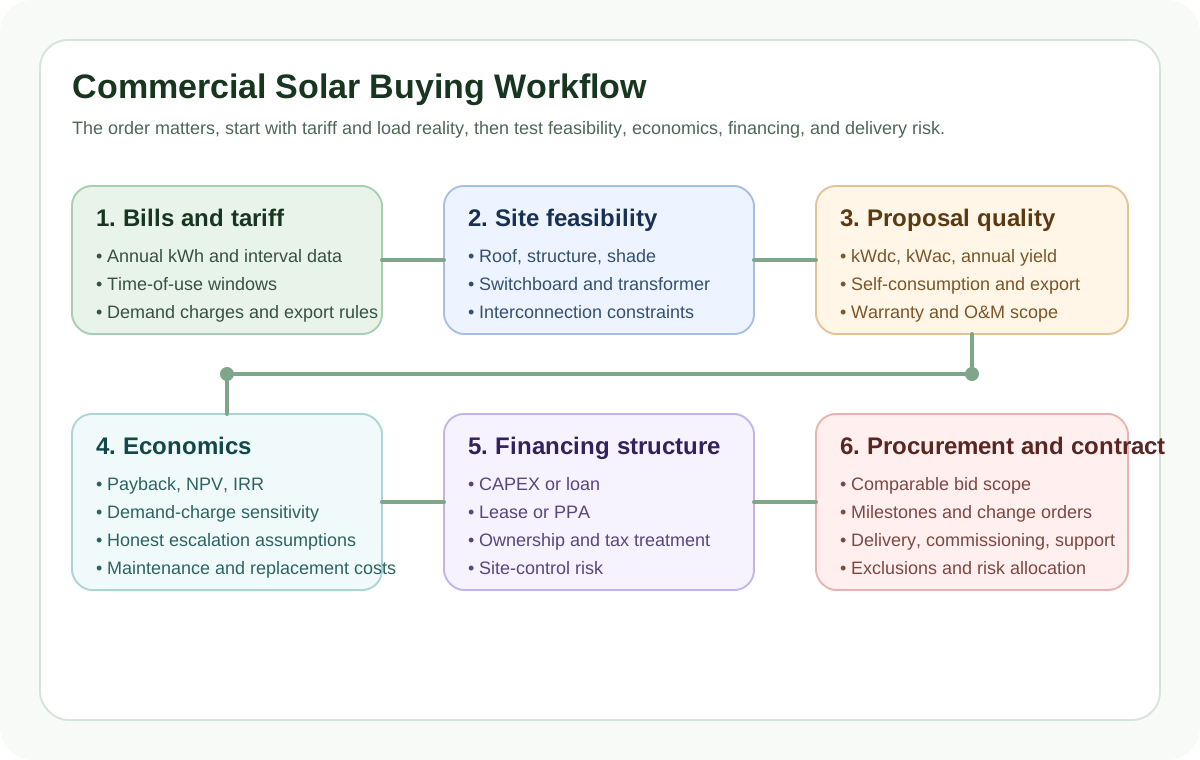
That is why the best commercial solar decisions usually start with the electricity bill and end with contract language, not the other way around. This guide walks through the evaluation process from site and tariff analysis to ROI modelling, financing choice, and supplier selection so you can compare proposals on more than headline price.
Why Commercial Solar Is Different
Section titled “Why Commercial Solar Is Different”Commercial buyers usually face a more layered decision than homeowners because several things are happening at once.
- The building may have multiple meters, irregular operating hours, or seasonal demand swings.
- The tariff may include both energy charges in
kWhand demand charges inkW. - The roof or ground space may be shared with HVAC, drainage zones, future expansion, or landlord restrictions.
- Finance teams care about cash flow, tax treatment, accounting treatment, and ownership risk, not just payback.
- Procurement often involves multiple stakeholders, including operations, finance, facilities, legal, and external landlords or lenders.
In practice, a commercial solar system only looks attractive when those moving parts line up. A large array on the wrong tariff can disappoint. A slightly smaller system paired with the right contract and demand reduction strategy can outperform it.
The Short Version
Section titled “The Short Version”If you want the fast diagnostic, this table gets you most of the way there.
| Question | Why it matters |
|---|---|
| When does the site actually peak | Determines whether solar reduces energy charges only, or demand charges as well |
| Can the roof and switchboard support the project | Feasibility and hidden upgrade costs often show up here |
| How much generation will be self-consumed | Self-consumption usually drives savings better than optimistic export assumptions |
Is the project being bought with cash, debt, lease, or PPA | Changes ownership, cash flow, tax treatment, and risk allocation |
| Are bids based on the same scope and assumptions | Without this, quote comparison is mostly noise |
Start With the Load, Not the Module
Section titled “Start With the Load, Not the Module”Before comparing panels, collect twelve to twenty-four months of electricity bills and interval data if your utility provides it. This is the foundation for every serious proposal.
Focus on these inputs first.
- Annual consumption in
kWh - Monthly peak demand in
kW - Time-of-use pricing windows
- Demand charges and ratchet clauses
- Operating hours, including weekend and evening loads
- Planned site changes such as electrification, EV charging, new machinery, or longer shifts
This step matters because commercial solar performance depends less on annual sunshine alone and more on when the building actually consumes energy. A warehouse that peaks at noon behaves very differently from a cold storage site or hospitality venue that peaks late in the day.
If you skip this part, suppliers can still sell you a system, but they will be guessing at the single most important variable, how your load shape matches solar production.
Assess Site Suitability Early
Section titled “Assess Site Suitability Early”A strong commercial proposal should include a proper site assessment rather than a generic desktop quote. At minimum, review the following.
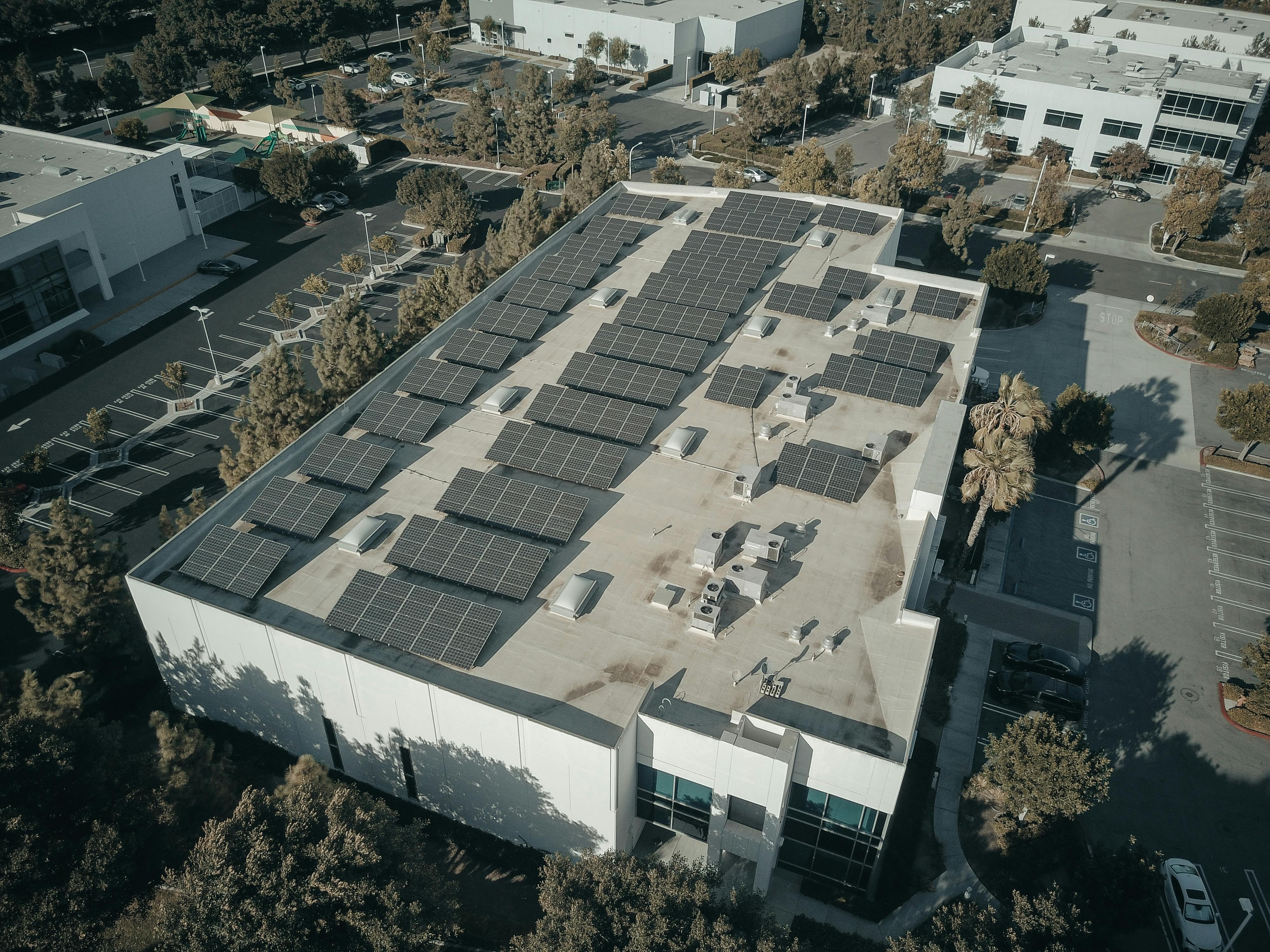
Commercial solar feasibility is often decided by roof area, obstructions, and electrical access long before procurement is finished. Photo by Kindel Media on Pexels.
Roof, Structure, and Space
Section titled “Roof, Structure, and Space”- Roof age and remaining service life
- Structural loading capacity
- Waterproofing details and roof warranty implications
- Shading from nearby plant, parapets, or future development
- Clear access routes for installation and maintenance
If the roof may need replacement in the next few years, deal with that before solar. Removing and reinstalling a commercial array later can erase a lot of the savings that looked great in the first sales deck.
Electrical and Interconnection Constraints
Section titled “Electrical and Interconnection Constraints”- Main switchboard capacity
- Transformer or service upgrade requirements
- Interconnection export limits
- Fire access setbacks and local code constraints
- Monitoring and communications requirements
Some sites look perfect on paper and still get stuck at interconnection. That is one reason several industry guides recommend treating utility approval as an early workstream, not an afterthought.
System Design Choices
Section titled “System Design Choices”Most commercial buyers will compare variations of these design decisions.
- Rooftop vs ground-mount vs carport
- String inverters vs module-level power electronics where shading or design complexity warrants it
- Solar-only vs solar plus battery storage
- Full export, zero export, or self-consumption-led design
The right answer depends on tariff design and operations. If your business pays heavily for imported daytime electricity, self-consumption may be enough. If demand charges are painful and your peak hits after solar production fades, battery storage or controls may deserve a serious look.
What a Good Commercial Proposal Should Show
Section titled “What a Good Commercial Proposal Should Show”Commercial proposals should be detailed enough for a finance or facilities review, not just a sales conversation. When comparing bids, ask every supplier to show the same core items so you can compare like with like.
- System size in
kWdcandkWac - Estimated annual generation in
kWh - Performance assumptions, including irradiation source, shading, degradation, and temperature losses
- Estimated self-consumption rate and export volume
- Demand charge savings assumptions if they are claimed
- Equipment brands, model numbers, and warranty terms
- Monitoring platform and reporting access
- Installation timeline, shutdown windows, and commissioning scope
- Operations and maintenance responsibilities after handover
This is where cheaper proposals often start to wobble. A low price can hide weak production assumptions, thin warranties, missing switchboard upgrades, or vague maintenance obligations. A more expensive system may produce better long-term value if the design is better matched to the building and tariff.
Build the Business Case With the Right Metrics
Section titled “Build the Business Case With the Right Metrics”Commercial solar should be tested as an investment case, not just a marketing line about sustainability. The useful metrics are familiar to finance teams.
- Simple payback
- Net present value,
NPV - Internal rate of return,
IRR - Cash flow by year
- Sensitivity to tariff inflation, degradation, and maintenance costs
Several commercial solar ROI guides make the same point in different ways. The headline result can look dramatic, but only if the assumptions are honest. One example often cited in the market is a 250 kW system delivering multi-year savings that far exceed the original capital cost. That can happen, but only when system output, tariff escalation, incentives, and on-site consumption align.
So when you review ROI, test the assumptions underneath it.
- What utility rate escalation is assumed
- Whether tax incentives, depreciation, or grants are included
- Whether export credits are realistic for your market
- What annual panel degradation rate is used
- Whether inverter replacement and maintenance are budgeted
- Whether the model assumes operational changes that have not happened yet
If a supplier shows a short payback but cannot explain these inputs clearly, the model is not decision-grade yet.
Demand Charges Can Make or Break the Economics
Section titled “Demand Charges Can Make or Break the Economics”This is the part many first-time buyers underestimate.
A residential customer mostly cares about energy consumed over time. A commercial customer may also pay for the highest short burst of demand during the billing period. In simple form, the calculation can look like this.
Peak demand in kW x demand charge rate = monthly demand charge
Industry examples regularly show demand charges accounting for a meaningful share of commercial bills, sometimes even 30% to 70% depending on tariff structure and building type. Aurora Solar illustrates the logic with an example where a 500 kW peak at $9.91/kW creates a monthly demand charge of nearly $5,000.
The practical takeaway is straightforward.
- If your peak demand happens while the sun is shining, solar can reduce both energy purchases and part of the demand bill.
- If your peak happens in the late afternoon, evening, or during short equipment spikes, solar alone may not cut demand charges as much as the sales pitch implies.
- If demand charges are a major line item, battery storage, load control, or staged equipment scheduling may deserve equal attention alongside panel size.
That is also why the National Renewable Energy Laboratory has published modelling work specifically on estimating demand charge savings from PV for commercial buildings. The savings are real, but they are highly site-specific.
Compare Financing Structures Before You Compare Prices
Section titled “Compare Financing Structures Before You Compare Prices”Commercial solar can be bought in several ways, and the cheapest lifetime option is not always the easiest one for the business to approve.
Cash Purchase or CAPEX
Section titled “Cash Purchase or CAPEX”Best for businesses with available capital, taxable profits, and a long site horizon.
Typical advantages include full ownership, full access to incentives where available, and the strongest long-term savings. The trade-off is obvious, more cash tied up on day one and full responsibility for asset performance.
Loan or Green Loan
Section titled “Loan or Green Loan”Best for businesses that want ownership but prefer to preserve cash.
Loans spread the capital burden while allowing the buyer to retain system benefits. Review interest cost, security requirements, prepayment rules, and whether debt service still leaves the project cash-flow positive in the early years.
Operating Lease or Fixed Lease
Section titled “Operating Lease or Fixed Lease”Best for buyers who want predictable monthly payments and limited upfront cost.
Lease structures can simplify budgeting, but they also require careful review of maintenance obligations, end-of-term options, roof access rights, and total lifetime cost. A lease that looks operationally simple can become expensive if buyout terms are weak.
Power Purchase Agreement, PPA
Section titled “Power Purchase Agreement, PPA”Best for buyers who want little or no upfront capital and are happy to buy solar energy as a service.
In a PPA, the third party usually owns and maintains the system while the customer pays for the electricity generated, often at an agreed discount to grid power. This can work well for cash-constrained businesses, but it shifts some upside to the provider and deserves close review of escalators, performance guarantees, outage treatment, and end-of-term buyout options.
The key distinction many financing guides emphasise is simple. A lease usually charges a fixed recurring payment for the equipment. A PPA usually charges per unit of electricity generated or consumed. That sounds subtle, but it changes performance risk, accounting treatment, and commercial incentives.
Lease-to-Own or Hybrid Structures
Section titled “Lease-to-Own or Hybrid Structures”Some markets also offer lease-to-own structures, hybrid service agreements, or bundled solar plus storage financing. These can make sense, but only if the transfer conditions, residual value assumptions, and maintenance handover are crystal clear.
A Simple Rule for Financing Choice
Section titled “A Simple Rule for Financing Choice”If your business wants the strongest long-term economics and can use the tax benefits, ownership usually wins.
If cash preservation matters more than absolute lifetime savings, debt, lease, or PPA structures may fit better.
If site control is uncertain, for example a short lease term or landlord dependency, avoid overcommitting to a structure that assumes you will stay put for fifteen to twenty-five years.
That last point gets missed a lot. Solar is a long-life asset. Your property agreement may not be.
Run Procurement Like a Capital Project
Section titled “Run Procurement Like a Capital Project”Commercial solar procurement works best when the buyer creates a clear process instead of collecting random quotes and hoping the cheapest one is good enough.
Step 1, Define the Brief
Section titled “Step 1, Define the Brief”Document the site, tariff, operating hours, roof condition, metering arrangement, and project goals. Be explicit about whether you care most about bill reduction, sustainability reporting, backup capability, demand charge reduction, or cash-flow neutrality.
Step 2, Build a Shortlist
Section titled “Step 2, Build a Shortlist”Prefer suppliers with commercial experience relevant to your building type and system size. Ask for recent comparable projects, certifications, insurance cover, safety documentation, and references.
Step 3, Issue a Comparable Scope
Section titled “Step 3, Issue a Comparable Scope”Give bidders the same consumption data, drawings, site constraints, and commercial objectives. This reduces the classic problem where every quote is based on different assumptions and cannot be compared fairly.
Step 4, Evaluate More Than Price
Section titled “Step 4, Evaluate More Than Price”Look at design quality, generation model credibility, interconnection strategy, warranty coverage, maintenance scope, and contractual risk allocation. A cheaper proposal that excludes switchboard work or future roof coordination is not actually cheaper.
Step 5, Negotiate the Contract
Section titled “Step 5, Negotiate the Contract”Review payment milestones, delay remedies, performance guarantees, defects liability, change-order rules, and who owns environmental attributes or export revenue. Legal review is worth it here.
Step 6, Manage Delivery and Commissioning
Section titled “Step 6, Manage Delivery and Commissioning”Confirm shutdown windows, site access rules, health and safety procedures, commissioning tests, as-built documentation, monitoring setup, and training for whoever will operate the system after handover.
Some commercial installation guides note that design and engineering alone can take 8 to 10 weeks before construction, with installation and approvals extending the full program further. For larger sites, that is normal. Treat schedule certainty as part of the buying decision.
Questions to Ask Before You Sign
Section titled “Questions to Ask Before You Sign”Use this checklist in every commercial quote review.
- What share of solar generation is expected to be self-consumed on site
- What tariff and demand charge assumptions sit behind the savings model
- What happens if the utility limits exports
- Who is responsible for roof penetrations, waterproofing, and future roof works
- Which party handles monitoring, maintenance, and fault response after commissioning
- Are battery storage, load controls, or tariff changes part of the model, or just optional later
- What happens if the project is delayed by interconnection, landlord approvals, or switchboard upgrades
- Who owns renewable energy certificates, carbon claims, or export income
- What warranties are backed by manufacturers versus the installer
- What is excluded from the quoted price
These questions sound basic, but they flush out most weak proposals very quickly.
Common Red Flags
Section titled “Common Red Flags”- Savings estimates built only on annual
kWhwithout interval load data - Demand charge savings claimed without showing when the site actually peaks
- Proposals that skip roof condition or structural review
- Export assumptions that ignore utility curtailment or interconnection limits
- Contracts with vague change-order language
- Financing offers that hide escalators or end-of-term purchase formulas
- Very low prices paired with generic equipment schedules and weak O&M scope
Commercial solar is one of those categories where cheap can get expensive surprisingly fast.
The Buying Sequence That Usually Works Best
Section titled “The Buying Sequence That Usually Works Best”If you want a compact framework, follow this order.
- Gather bills, interval data, and site information.
- Understand the tariff, especially demand charges and export treatment.
- Confirm roof, structural, and interconnection feasibility.
- Decide whether the project goal is energy savings, demand reduction, sustainability reporting, resilience, or a mix.
- Model the business case with transparent assumptions.
- Compare financing structures based on ownership, cash flow, and site control.
- Run a structured procurement and contract review process.
Do it in this order and the project usually gets clearer. Reverse it and you end up shopping for hardware before you understand the economics.
Watch or Read More
Section titled “Watch or Read More”Further Reading
Section titled “Further Reading”The following references are especially useful if you want to go deeper into commercial system design, ROI modelling, demand charges, or procurement.
- Paradise Solar Energy, Commercial Solar 101
- Solar Energy UK, Corporate Buyers’ Guide
- InecoEnergy, A Complete Guide to Commercial Solar Panels, Costs, Benefits and Guidelines
- SolarQuotes Australia, Commercial Solar Guide
- Xova Energy, The ROI of Solar Panels for Businesses
- Namaste Solar, 5 Factors That Determine Commercial Solar ROI
- Colite Technologies, Comparing Commercial Solar Financing Options, PPA, Lease, or Cash Purchase
- Evo Energy UK, Solar Financing Options, CAPEX, PPA, Lease to Own, Green Loans
- Aurora Solar, Making Sense of Demand Charges
- Sol Systems, A Solar Guide to Demand Charges
- NREL, How to Estimate Demand Charge Savings from PV on Commercial Buildings
- TotalEnergies Asia, A Step-by-Step Guide to Navigating the Procurement Process for Solar Energy
- Solar Best Practices, Engineering, Procurement and Construction Guidelines