Buying Guide
How to Choose a Solar System
A practical guide to choosing the right solar system by auditing energy use, sizing capacity, comparing quotes, and checking installer quality.
Choosing a solar system starts well before you compare panel brands or ask for a price per watt. The strongest decisions usually begin with your energy use, your roof, your grid connection, and the job you want the system to do.
A lot of bad solar buying happens in the reverse order. People ask for quotes first, then try to work backwards into whether the system size, export assumptions, battery option, or installer recommendation actually makes sense.
This guide is built to stop that from happening. It follows the real decision chain from energy audit to supplier comparison so you can judge a proposal with more confidence.
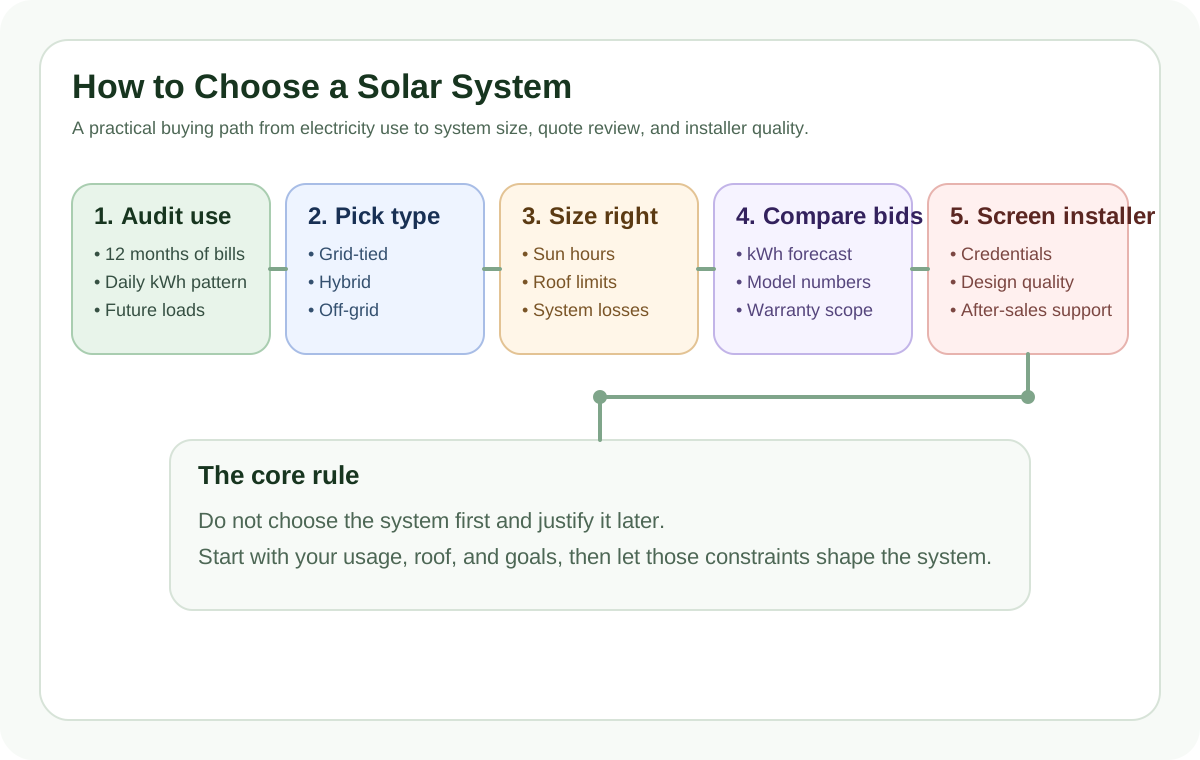
The Five-Step Decision Framework
Section titled “The Five-Step Decision Framework”If you want the short version first, it looks like this.
- Audit how much electricity you use and when you use it
- Decide which system type fits your site and goals
- Estimate the right system size instead of guessing
- Compare quotes on assumptions, not just on price
- Check whether the installer is qualified to design and support the system properly
That order matters. If you skip the first two steps, you are not really choosing a system. You are reacting to whatever a salesperson decided to show you.
Step 1, Audit Your Energy Use First
Section titled “Step 1, Audit Your Energy Use First”Before you think about panels or inverters, pull at least twelve months of electricity bills. If you can access interval or smart-meter data, even better.
Look for these numbers first.
- Total annual electricity use in
kWh - Average daily use in
kWh - Seasonal differences between summer and winter
- Daytime versus evening demand
- Any large loads such as air conditioning, EV charging, water heating, pumps, or workshop equipment
This matters for a simple reason. Solar systems produce energy on a schedule set by the sun, not by your household routine. If your biggest consumption happens during the day, solar can offset more grid imports directly. If most of your demand lands after sunset, battery storage or tariff strategy becomes more important.
If you want a structured way to turn those habits into design numbers before you talk to installers, use Load Estimation first. It gives you a much cleaner daily kWh baseline than guessing from memory.
Several consumer guides make the same recommendation here. Start by reducing waste before you size the solar system. If your home is leaking energy through poor insulation, inefficient appliances, or unnecessary standby loads, you may end up buying a larger system than you actually need.
A Simple Energy Audit Checklist
Section titled “A Simple Energy Audit Checklist”- Collect twelve months of bills
- Note your average daily and monthly usage
- Identify large recurring loads
- Check whether future changes are coming, such as an EV, heat pump, pool pump, or home office expansion
- Improve easy efficiency wins before locking in solar size
Step 2, Choose the Right System Type
Section titled “Step 2, Choose the Right System Type”Once you understand your usage, the next question is what kind of system you actually need.
At a high level, most buyers are choosing between these paths.
| System type | Best for | Main trade-off |
|---|---|---|
| Grid-tied | Lowering electricity bills where the grid is reliable | Usually no backup during outages |
| Hybrid | Bill savings plus battery backup and self-consumption shifting | Higher cost and more design complexity |
| Off-grid | Sites without practical grid access | Much tighter sizing, battery planning, and backup generation needs |
If your goal is mainly lower bills and your grid is stable, a standard grid-tied system is often the first answer.
If outages matter or your evening consumption is high, hybrid systems deserve a closer look, especially if you are already thinking about how to choose a battery alongside the array.
If the site has no grid access, or the grid is too unreliable to trust, the conversation changes completely. Off-grid design is no longer just about panel size. It becomes a full energy-system problem involving batteries, autonomy days, inverter surge handling, and often generator support. The cost logic changes too, which is why Off-Grid Solar System Cost should be treated as its own buying path.
If you want a deeper architecture breakdown, read Types of Solar Systems and On-Grid vs Off-Grid Systems.
Step 3, Estimate the Right System Size
Section titled “Step 3, Estimate the Right System Size”This is where a lot of buyers want a shortcut.
There is not one perfect formula for every site, but there is a sound way to think about it.
The basic logic is this.
required system size ≈ energy demand ÷ sun resource ÷ system losses
One common sizing approach is to estimate monthly or daily energy demand, divide by the available peak sun hours, then correct for real-world losses in the system.
That means sizing depends on more than annual consumption alone.
- Your location and solar resource
- Roof orientation and tilt
- Shading losses
- Inverter and wiring losses
- Export limits imposed by the utility
- Future electricity demand changes
A Simplified Example
Section titled “A Simplified Example”If a site uses about 900 kWh per month, receives an average of 5 peak sun hours per day, and assumes a system efficiency factor of about 80%, the rough calculation might look like this.
900 kWh / 30 days = 30 kWh per day30 / 5 / 0.8 = 7.5 kWThat does not mean 7.5 kW is automatically the right system.
It means that is the rough starting point before roof limits, export caps, budget, and future loads change the answer.
This is also why some markets end up clustering around system sizes like 6 kW. Not because that number is universally correct, but because it often hits a decent balance between cost, roof space, and savings under common household conditions.
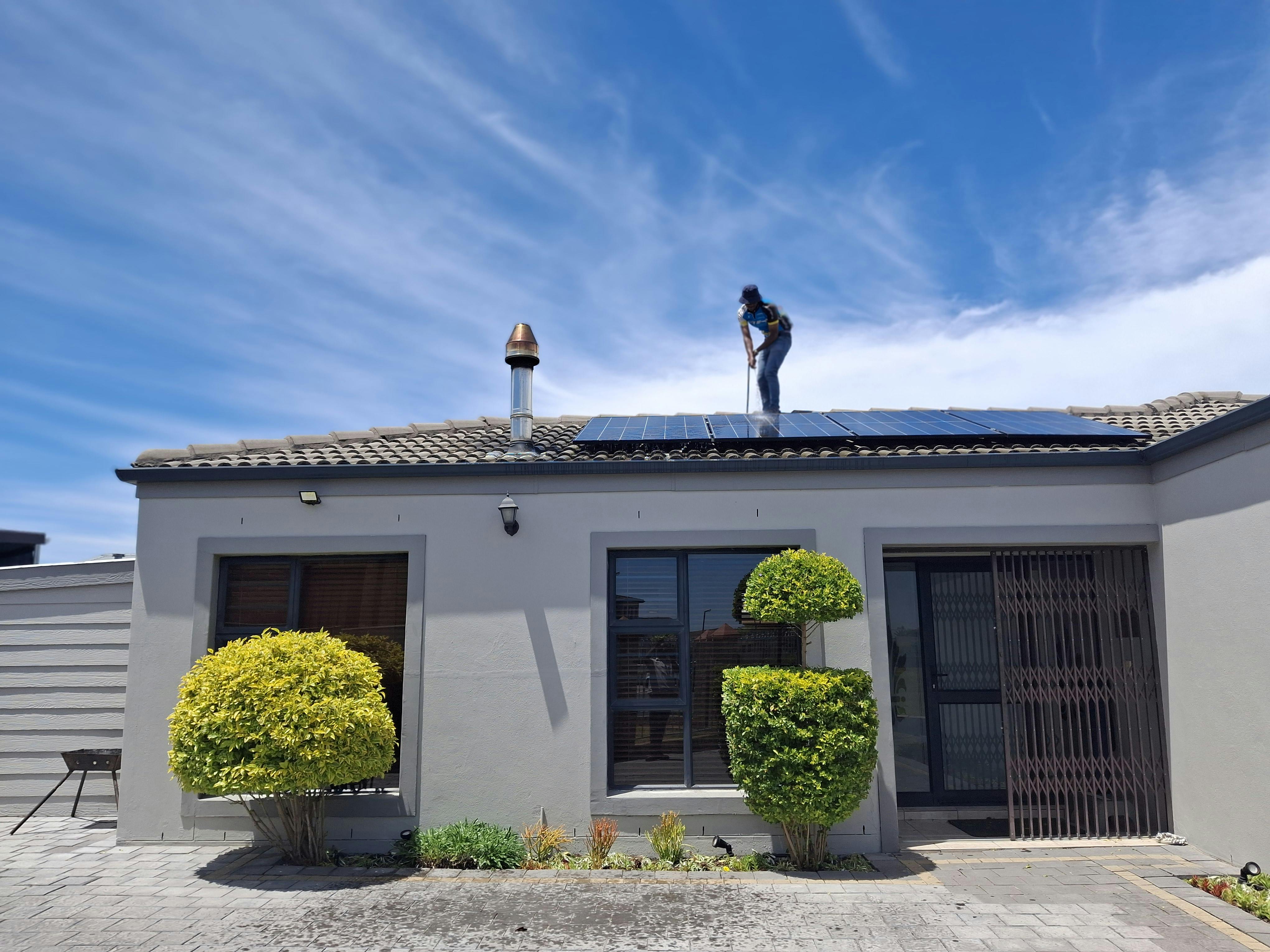
Roof geometry and real installation conditions can reshape the “right size” after the spreadsheet looks finished. Photo by Spaxido Spaxido on Pexels.
What Can Change the Final Size
Section titled “What Can Change the Final Size”- A small roof may cap what is physically possible
- Weak export rules may reduce the value of oversizing
- Future EV charging or electrification may justify a larger array
- A battery plan may change how much solar oversupply is worth
- A west-facing roof may behave differently from an ideal north- or south-optimized layout depending on hemisphere and tariff pattern
If you want to model the numbers more directly, use Solar System Sizing and Load Estimation.
Step 4, Compare Quotes the Right Way
Section titled “Step 4, Compare Quotes the Right Way”This is where many buyers slip into the wrong comparison.
They compare headline price.
What they should compare is the logic underneath the price.
Two quotes can describe systems that look similar on the surface and still be based on very different assumptions about generation, self-consumption, roof layout, warranties, or future maintenance.
When comparing solar quotes, ask every supplier to show the same core items.
- System size in
kW - Estimated annual generation in
kWh - Panel and inverter brand plus exact model numbers
- Layout assumptions, including shading treatment
- Price per watt and total installed cost
- Financing or payment terms
- Product warranty and workmanship warranty
- Monitoring platform and post-install support
This is why several quote-comparison guides say the same thing in different words.
You are not comparing numbers.
You are comparing assumptions.
If you want the pricing side of that review process unpacked in more detail, pair this section with the broader Solar System Cost Guide before you decide which quote is really cheaper.
A Good Quote Review Checklist
Section titled “A Good Quote Review Checklist”| Check | What you want to see |
|---|---|
| Production estimate | A believable kWh forecast tied to your roof and location |
| Equipment detail | Named brands and model numbers, not vague placeholders |
| Layout quality | A design that clearly accounts for roof shape, setbacks, and shading |
| Warranty scope | Clear separation between product, performance, and workmanship cover |
| Finance logic | Transparent loan, lease, or cash terms with no fuzzy savings claims |
If one installer gives you a detailed design and another gives you only a price and a logo sheet, those are not equal-quality proposals even if the total dollars look close.
Step 5, Screen the Installer, Not Just the Hardware
Section titled “Step 5, Screen the Installer, Not Just the Hardware”Solar systems are long-life assets, and the installer is part of the product whether buyers like it or not.
This is why consumer guides and community advice spend so much time on installer questions. Good equipment can still lead to a frustrating project if the installer is weak on design, permitting, commissioning, or after-sales support.
Ask questions like these.
- Is the installer properly licensed and accredited for your market
- Do they design systems around your usage, or start by pushing a standard package
- What production do they expect and how was it modelled
- What is covered by workmanship warranty and for how long
- Who handles monitoring, troubleshooting, and warranty claims after installation
- Will your roof, meter, switchboard, or utility interconnection need upgrades
- Is the design leaving room for future battery storage or EV charging if needed
One piece of real-world advice from community discussions is especially useful here.
Be careful about telling installers exactly what size system you think you want before they analyse the site. A better signal of quality is whether they ask the right questions first.
Red Flags to Watch For
Section titled “Red Flags to Watch For”- Quotes built from annual usage alone with no effort to understand load timing
- Savings claims that rely on unrealistic export assumptions
- Proposals with no model numbers or weak warranty detail
- Installers who avoid discussing roof age, switchboard condition, or permitting
- Sales pressure around signing quickly before you understand the design
- Systems sized with no mention of future loads such as EVs or electrification
Solar regret often starts here. Not because solar is a bad idea, but because the project was sold before it was properly understood.
How to Balance Budget, Aesthetics, and Performance
Section titled “How to Balance Budget, Aesthetics, and Performance”There is no universal best system because different buyers weight different things.
Some want the shortest payback.
Some care about backup.
Some care about minimizing visible hardware on the roof.
Some want a battery-ready design even if the battery comes later.
That is normal. The point is not to pretend all goals align perfectly. The point is to decide which one leads the project, then judge the trade-offs honestly.
A Practical Priority Order
Section titled “A Practical Priority Order”If you are unsure how to rank trade-offs, this is a strong default order.
- Site suitability and safety
- Good energy match between system and usage
- Credible equipment and installer quality
- Transparent economics
- Aesthetic preferences and optional upgrades
That order tends to protect buyers from expensive mistakes better than choosing on appearance or headline savings alone.
Related Guides in Focus Solar
Section titled “Related Guides in Focus Solar”- Questions to Ask a Supplier
- How to Choose Solar Panels
- How to Choose an Inverter
- How to Choose a Battery
- Solar System Cost Guide
- Solar System Sizing
Watch or Read More
Section titled “Watch or Read More”Key Takeaways
Section titled “Key Takeaways”- Start with an energy audit before you choose system size or hardware.
- Pick the system type based on your real goal, bill savings, backup, or full independence.
- Size the array using energy demand, sun hours, and system losses, not guesswork.
- Compare quotes on production assumptions, equipment detail, and warranty scope, not just total price.
- Treat installer quality as part of the system because long-term performance depends on design and support, not just on panel brand.
Sources Used for This Page
Section titled “Sources Used for This Page”This page was expanded using the research notes and source list provided for this project, especially the following references.
- CHOICE Australia, How to Buy the Best Solar Panels
- Which?, Solar Panels Buying Advice
- Currents, Guide to Conducting a Solar Energy Audit
- Huawei Solar, Mastering Solar System Size
- SolarReviews, How to Compare Solar Quotes
- Paradise Solar Energy, How to Compare Solar Quotes
- YouTube, How to Size a Solar System, Inverter, Battery and Panel