Buying Guide
Questions to Ask a Supplier
A practical guide to the questions you should ask solar suppliers about credentials, equipment, pricing, installation, and long-term support before signing.
The right questions do more than fill a checklist.
They reveal how a solar supplier thinks.
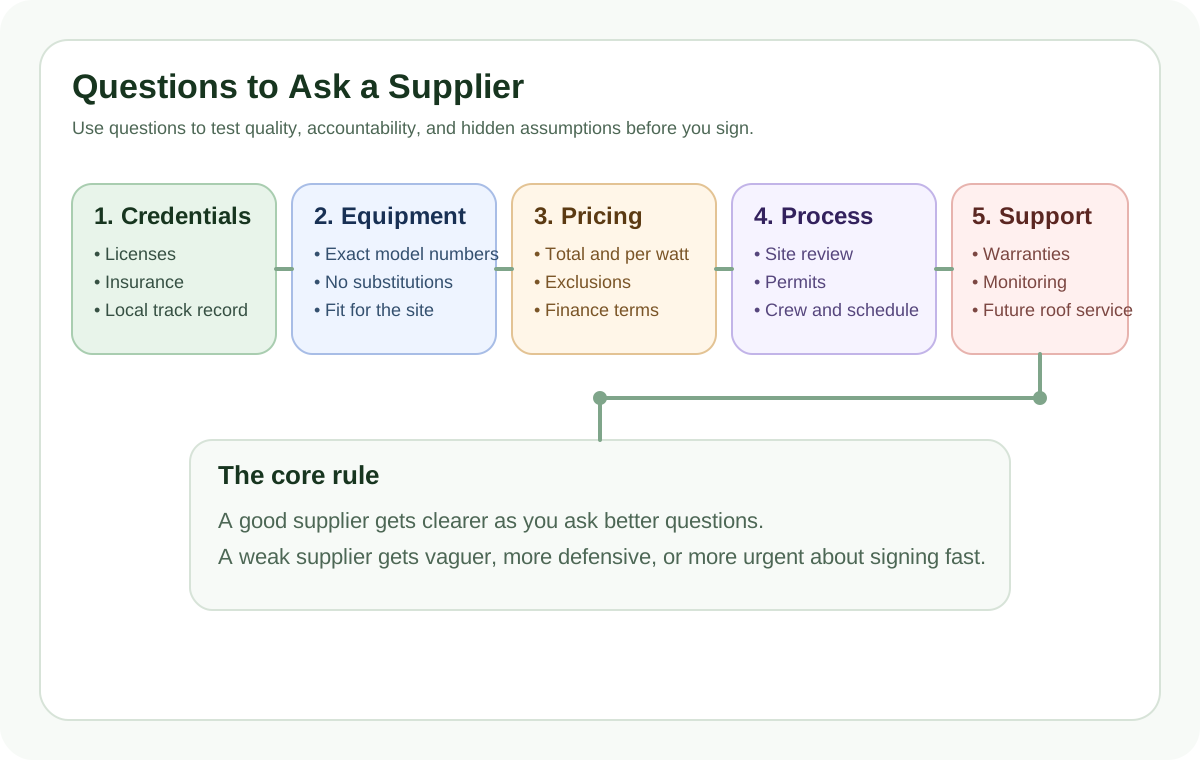
A strong supplier can explain the system clearly, defend the assumptions behind the quote, and tell you exactly what happens before, during, and after installation. A weak supplier usually hides behind vague promises, missing model numbers, or pressure to sign before the details are clear.
That is why this page is not just a list of polite questions. It is a screening tool.
The Five Categories That Matter
Section titled “The Five Categories That Matter”When you talk to a supplier, your questions should cover five areas.
| Category | What you are really testing |
|---|---|
| Credentials | Whether the company is qualified, experienced, and accountable |
| Equipment specs | Whether the quoted hardware is real, suitable, and likely to stay the same |
| Financial terms | Whether the price and savings logic are transparent |
| Installation process | Whether the project is genuinely planned or still mostly sales talk |
| Long-term support | Whether the company will still be useful after you have paid them |
If a supplier sounds polished on one category but vague on the rest, that is usually a sign to slow down.
Start With the Company Itself
Section titled “Start With the Company Itself”Before you worry about modules and inverters, find out who you are actually hiring.

Supplier screening should feel closer to contract review than to a casual sales call. Photo by Karolina Grabowska on Pexels.
Ask questions like these.
- How long have you operated in this market
- How many similar systems have you installed locally
- What licenses, accreditations, or certifications do you hold
- Can you provide proof of insurance
- Can you share at least three customer references from comparable projects
- Will the work be done by your own crew or by subcontractors
These questions are not just about legitimacy. They also tell you whether the company actually stands behind the job or mainly acts as a sales layer passing work downstream.
If the installation will be subcontracted, that is not automatically bad. But you should know it upfront, and the supplier should be able to explain who owns quality control and warranty follow-through.
Ask for Exact Equipment, Not Brand Families
Section titled “Ask for Exact Equipment, Not Brand Families”This is one of the most important filters in the whole buying process.
Do not accept vague phrases like premium panel or tier-one inverter.
Ask for the exact model numbers.
- Which panel brand and model is quoted
- Which inverter brand and model is quoted
- If a battery is included, which exact battery model is quoted
- What are the panel efficiency, degradation, and warranty terms
- What is the inverter type and monitoring platform
- Can equipment be substituted later, and under what conditions
If the quote does not specify exact equipment, it is harder to compare offers fairly and easier for the supplier to change hardware later without you noticing the difference.
That is why one of the best direct questions is this.
Will the quoted equipment stay the quoted equipment unless I approve a change in writing.
Use Questions to Test Whether the System Fits Your Usage
Section titled “Use Questions to Test Whether the System Fits Your Usage”A supplier should be able to explain why the system size fits your electricity use.
Ask questions like these.
- How does the proposed
kWsize relate to my actual consumption - What data did you use, utility bills, interval data, or a rough estimate
- What annual generation in
kWhdo you expect - What assumptions sit behind that production forecast
- How much of the generation do you expect I will self-consume
- What export assumptions are included in the savings model
This is one of the clearest ways to separate design work from sales work.
If the supplier can explain the assumptions cleanly, that is a good sign.
If they keep returning to the headline savings number without explaining how it was built, be careful.
Ask Pricing Questions Line by Line
Section titled “Ask Pricing Questions Line by Line”Solar pricing can look simple in a marketing slide and become much more complicated in a contract.
That is why financial questions need to be precise.
- What is the total installed price
- What is the price per watt
- What exactly is included in that total
- What is excluded
- Are there extra charges for roof issues, switchboard upgrades, trenching, permits, or monitoring subscriptions
- If financing is offered, what are the interest rate, term, and total repayment amount
- Which tax credits, rebates, or incentives are assumed, and am I personally responsible for qualifying
This is where hidden costs tend to live.
A cheaper quote is not automatically cheaper if it leaves out monitoring, roof remediation, interconnection work, or battery-ready design details that another supplier already priced in.
Warranty Questions, Where Weak Quotes Often Collapse
Section titled “Warranty Questions, Where Weak Quotes Often Collapse”Many quotes say the system is covered. Fewer explain what that actually means.
Split warranty questions into three separate buckets.
| Warranty area | What to ask |
|---|---|
| Product warranty | How long are the panels, inverter, and battery covered against defects |
| Performance warranty | What output is guaranteed after 10, 20, or 25 years |
| Workmanship warranty | How long does the installer stand behind the installation itself |
Then go one step further.
Ask these questions directly.
- Who handles the claim if equipment fails
- Who pays labour for replacement
- If the installer stops operating, what support remains
- Is panel degradation or minimum output documented in the contract
- Is the manufacturer warranty actually available in my market
This is where vague reassurance is not enough. You want named responsibility, not warm wording.
Ask About Permits, Roof Checks, and the Real Installation Process
Section titled “Ask About Permits, Roof Checks, and the Real Installation Process”A good supplier should be able to describe the installation path in plain language.
Ask about these items.
- Who handles permits and utility paperwork
- Has a roof assessment already been done, or will that happen after signing
- What happens if the roof needs repairs or reinforcement
- Will there be a site visit before final design approval
- How long should design, permitting, installation, and interconnection take
- What shutdowns or access requirements should I expect
This is where a lot of cost surprises happen. Some companies sell first and investigate the site later. If roof or electrical issues are discovered after contract signing, the price can change quickly.
Ask About Monitoring and Performance Visibility
Section titled “Ask About Monitoring and Performance Visibility”Once the system is installed, you still need to know whether it is working properly.
Ask questions like these.
- What monitoring platform is included
- Will I get system-level or panel-level visibility
- Can I monitor generation in real time
- Will the installer receive alerts if something fails
- Is there a production guarantee, and what happens if the system underperforms
Monitoring is not a luxury feature. It is how you find out whether the system is doing what the quote promised.
Questions About Future Roof Repairs and Changes
Section titled “Questions About Future Roof Repairs and Changes”This area gets skipped surprisingly often.
Ask directly.
- If the roof needs repair later, who removes and reinstalls the panels
- Is that service included or billed separately
- If I want to add an EV charger, battery, or extra panels later, is the current design ready for that
- Is the inverter sized or selected with expansion in mind
These questions matter because solar is not a single-day decision. It changes how the roof and electrical system will be managed for years.
A Compact Question List You Can Actually Use
Section titled “A Compact Question List You Can Actually Use”If you want the short practical list, start here.
- How many similar projects have you installed locally
- What exact panel, inverter, and battery models are quoted
- How was the system sized for my usage
- What assumptions drive the savings estimate
- What is included in the total price, and what is excluded
- Who handles permits, interconnection, and site issues
- What warranties exist, and who honors them in practice
- What monitoring is included after installation
- What happens if the roof needs work later
- Can any equipment change without my written approval
Red Flags That Should Slow You Down
Section titled “Red Flags That Should Slow You Down”Some supplier behavior should immediately make you more cautious.
- Claims of free solar or guaranteed zero bills
- No exact model numbers in the quote
- Extremely low pricing with no clear explanation
- Pressure to sign quickly before site review is complete
- Vague answers about subcontractors, permits, or warranty responsibility
- No roof inspection before the contract locks in major assumptions
- Big savings promises with little discussion of usage or export assumptions
These are not small details. They are often the difference between a well-run project and a painful one.
How to Use Supplier Answers to Compare Quotes
Section titled “How to Use Supplier Answers to Compare Quotes”The point of asking questions is not only to protect yourself from scams.
It is also how you make quotes comparable.
Once each supplier has answered the same core questions, you can compare them on a more honest basis.
| What to compare | Why it matters |
|---|---|
| Equipment specificity | Reveals whether the quote is concrete or flexible in a bad way |
| Sizing logic | Shows whether the proposal is based on your real usage |
| Warranty clarity | Reveals who will still be accountable later |
| Installation process detail | Shows whether the project is genuinely planned |
| Pricing transparency | Helps expose hidden costs and soft assumptions |
The best supplier is not always the cheapest one.
It is often the one whose answers stay precise when the conversation gets specific.
A Good Default Decision Framework
Section titled “A Good Default Decision Framework”If you want the compact rule set, use this order.
- Verify the company is real, qualified, and accountable
- Lock down exact equipment and sizing assumptions
- Break the price apart until you know what is and is not included
- Clarify the installation path before signing
- Make sure the support story still makes sense after year one
That sequence usually exposes weak proposals fast.
Related Guides in Focus Solar
Section titled “Related Guides in Focus Solar”- How to Choose a Solar System
- How to Choose Solar Panels
- How to Choose an Inverter
- How to Choose a Battery
- Solar System Cost Guide
- Commercial Solar Buying Guide
Watch or Read More
Section titled “Watch or Read More”Key Takeaways
Section titled “Key Takeaways”- The best supplier questions test clarity, accountability, and assumptions, not just friendliness.
- Ask for exact equipment models, not broad brand labels.
- Split warranties into product, performance, and workmanship so responsibilities stay visible.
- Pricing should be broken into included items, exclusions, and financing terms before you sign anything.
- Vague answers, pressure tactics, and missing site review are usually more important than a low headline price.
Sources Used for This Page
Section titled “Sources Used for This Page”This page was expanded using the research notes and source list provided for this project, especially the following references.
- DOE, Smart Shopping Tips for Solar
- CPUC, Solar Consumer Protection Guide
- ASES, 40 Questions to Ask an Installer
- EnergySage, Common Solar Scams and How to Avoid Them
- SolarReviews, Questions to Ask Solar Energy Companies
- Solar Permit Solutions, Critical Questions to Ask Before Signing a Solar Contract
- Reposit Power, 20 Smart Questions to Ask Before Signing Your Solar and Battery Contract
- YouTube, Ask These 10 Questions Before You Choose a Solar Company