Getting Started
What Is Solar Energy
Learn what solar energy is, how it becomes electricity or heat, why it matters, and how it compares with conventional energy sources.
Solar energy is energy from the sun. More precisely, it is the radiant energy carried by sunlight that can be captured and turned into heat, electricity, or useful thermal energy for buildings and industry.
That sounds simple, but it helps to pause here because people often use three different ideas as if they mean the same thing.
- Solar energy is the broad category, meaning usable energy derived from sunlight
- Solar power usually refers to technologies that turn sunlight into usable power, especially electricity
- Solar PV is one specific way of doing that, using photovoltaic cells
So when someone says they are going solar, they usually mean solar electricity through photovoltaic panels. But solar energy is bigger than rooftop PV alone.
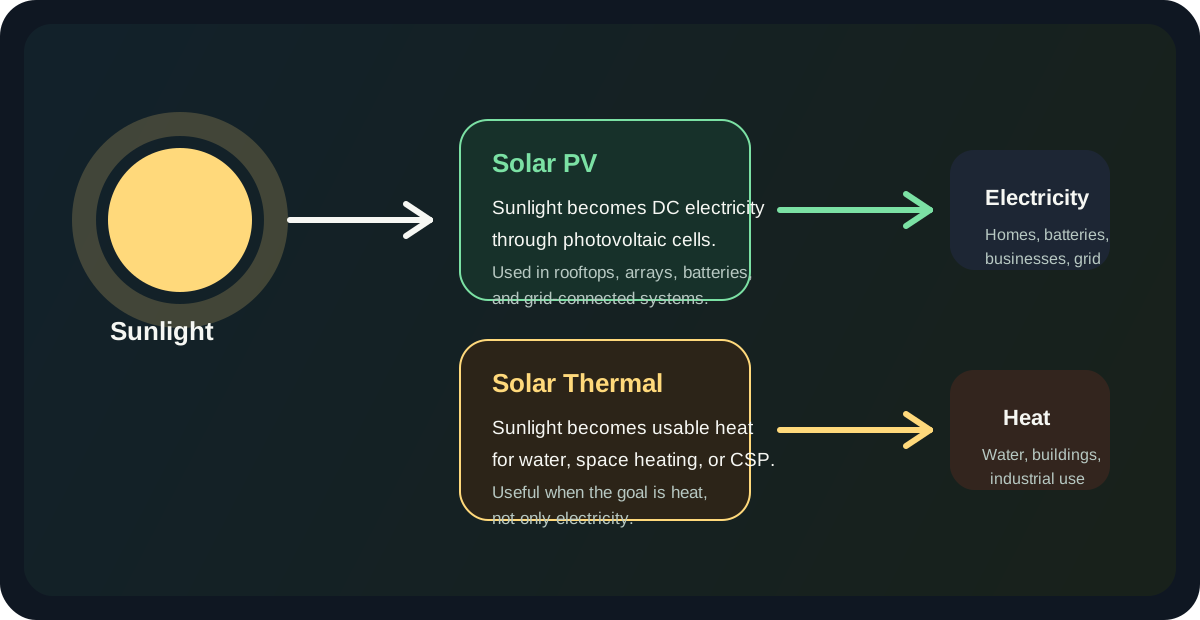
The Basic Definition
Section titled “The Basic Definition”The sun has been producing energy for billions of years, and it is the original source for almost all energy on Earth. Solar energy is the portion of that radiant energy that reaches our planet and can be harnessed by technology.
In practical terms, solar energy can be used in two main ways.
| Pathway | What it does |
|---|---|
| Solar photovoltaic, or PV | Converts sunlight directly into electricity |
| Solar thermal | Captures sunlight as heat for water, space heating, or power generation |
Some references also distinguish between active solar and passive solar.
- Active solar uses equipment such as PV panels, inverters, pumps, or collectors
- Passive solar uses building design, orientation, glazing, and thermal mass to capture or manage solar heat without mechanical conversion
That distinction matters because solar energy is not only about panels on a roof. It also includes solar water heating, concentrated solar thermal systems, and the way buildings are designed to make better use of sunlight.
How Solar Energy Becomes Useful Energy
Section titled “How Solar Energy Becomes Useful Energy”At the broadest level, solar energy becomes useful in one of two forms.
Solar electricity
Section titled “Solar electricity”This is the type most people think of first. Photovoltaic cells absorb sunlight and generate direct current, or DC, electricity. An inverter then converts that DC electricity into alternating current, or AC, which homes and businesses can use.
If you want the full step-by-step physics, How Solar Panels Work goes much deeper into the photovoltaic effect, PN junctions, and module wiring.
Solar heat
Section titled “Solar heat”Not all solar systems make electricity. Some use sunlight as heat directly.
Examples include the following.
- Solar water heating systems
- Space heating support
- Solar thermal collectors
- Concentrated solar power systems that use mirrors to produce high-temperature heat
This is one reason the phrase solar energy is broader than solar panels. Solar panels are important, but they are only one branch of the solar family.
Why Solar PV Gets Most of the Attention
Section titled “Why Solar PV Gets Most of the Attention”In modern energy discussions, solar PV dominates because it is the fastest-growing form of solar deployment worldwide and the technology most directly relevant to homes, businesses, and utility-scale electricity generation.
The basic flow looks like this.
- Sunlight hits a photovoltaic cell
- The semiconductor material releases electrons
- The cell produces DC electricity
- An inverter converts that power to AC electricity
- The electricity is used on-site, stored in batteries, or exported to the grid
That flow is one reason solar has become so accessible. A rooftop PV system can scale from a small house to a commercial warehouse, while the same core idea also works in utility-scale solar farms.
Why Solar Energy Matters
Section titled “Why Solar Energy Matters”There are a few reasons solar has moved from niche technology to central energy infrastructure.
It is renewable
Section titled “It is renewable”Solar energy is not fuel that gets burned once and disappears. As long as the sun continues to shine, new solar radiation reaches Earth every day.
That does not mean solar is constant. Output still depends on weather, season, latitude, and time of day. But the resource itself is not depleted in the way coal, oil, or gas are.
It produces very low operational emissions
Section titled “It produces very low operational emissions”Once a solar installation is built, it generates electricity without combustion. That means no smoke stack, no direct carbon dioxide emissions at the point of generation, and no air pollution from burning fuel during operation.
That is one of solar’s biggest climate advantages. The manufacturing footprint is real, and so are the materials and logistics involved, but the operating phase is remarkably clean.
It can be deployed at many scales
Section titled “It can be deployed at many scales”Solar can power calculators and remote sensors, suburban rooftops, warehouses, microgrids, irrigation pumps, and multi-gigawatt power plants. Few energy technologies scale this flexibly.
It can increase energy resilience
Section titled “It can increase energy resilience”Depending on system design, solar can reduce dependence on imported fuel, lower exposure to volatile electricity prices, and pair with batteries for backup power. This is especially valuable where grid reliability is weak.
The Main Advantages of Solar Energy
Section titled “The Main Advantages of Solar Energy”Most people start looking at solar because of economics, resilience, or environmental impact. Usually it is some combination of all three.
| Advantage | Why it matters |
|---|---|
| Lower operating costs | Sunlight is free once the system is installed |
| Low emissions in operation | No fuel combustion while generating electricity |
| Energy independence | Can reduce reliance on utilities or fuel deliveries |
| Low routine maintenance | PV systems generally have few moving parts |
| Flexible deployment | Works from tiny off-grid systems to massive solar farms |
| Potential property value benefits | In some markets, solar can improve asset attractiveness |
For many homes and businesses, the biggest day-to-day benefit is simple. Solar can reduce the amount of electricity bought from the grid.
For remote or outage-prone sites, the bigger benefit may be reliability rather than savings.
That is why system design matters so much. The same solar resource can serve very different goals depending on whether the project is On-Grid vs Off-Grid Systems or a hybrid setup with storage.
The Main Limitations of Solar Energy
Section titled “The Main Limitations of Solar Energy”Solar is powerful, but it is not magic. Good planning starts by understanding the limitations early.
It is variable
Section titled “It is variable”Solar production falls at night and changes with weather and season. A system without storage or grid support cannot deliver the same output all the time.
It needs space and good siting
Section titled “It needs space and good siting”The sunlight reaching any one square meter of Earth’s surface is limited, which means solar systems need area. Roof direction, shading, local climate, and available land all matter.
It often needs supporting equipment
Section titled “It often needs supporting equipment”PV systems do not stop at panels. They also need inverters, wiring, mounting, protection equipment, and sometimes batteries, charge controllers, or transformers.
Upfront cost still matters
Section titled “Upfront cost still matters”Even when solar has strong long-term economics, it still requires capital at the beginning. That cost profile is different from fossil fuels, where fuel spending continues throughout the life of the system.
This is why solar questions are rarely just about the panel price. They are really about lifetime energy cost, financing, and system design.
Solar Energy and Fossil Fuels
Section titled “Solar Energy and Fossil Fuels”This is where the conversation has changed a lot over the last decade.
Solar used to be framed mainly as a cleaner but more expensive alternative. That framing is increasingly outdated.
According to IRENA’s July 2025 reporting on 2024 costs, 91% of newly commissioned renewable power projects were more cost-effective than any new fossil fuel alternative. The same reporting said that solar PV was, on average, 41% cheaper than the lowest-cost fossil fuel alternative in 2024.
That does not mean every solar project is automatically cheaper than every fossil-based project everywhere. Local land costs, financing, labor, grid connection costs, and policy rules still matter. But the broad trend is now hard to ignore.
Solar is no longer only an environmental story.
It is also an infrastructure cost story.
Why the Cost Story Matters
Section titled “Why the Cost Story Matters”One of the most interesting things about solar economics is how different it feels from fossil generation.
With fossil fuels, you keep paying for fuel over time.
With solar, more of the cost is front-loaded into equipment and installation, while the energy source itself arrives for free every day afterward.
That changes how people think about payback, long-term operating risk, and price stability. A well-designed solar system can act like a hedge against future electricity cost volatility, especially in places with strong sunlight and high retail power prices.
Solar Energy Is Growing Fast
Section titled “Solar Energy Is Growing Fast”This is not a niche market anymore.
The International Energy Agency reported that global solar PV generation reached 2,000 TWh in 2024, supplying about 7% of global electricity generation. The IEA also estimated that installed solar PV capacity worldwide reached about 2.2 TW in 2024.
That growth did not appear out of nowhere. The IEA-PVPS Snapshot 2024 reported that cumulative global PV capacity had already reached 1.6 TW in 2023, after 446 GW of new PV installations were added that year alone.
That kind of scale changes the conversation. Solar is no longer only for enthusiasts, pilot projects, or premium green buildings. It is now one of the central technologies shaping how new electricity systems are built.
Solar Energy at Home vs Utility Scale
Section titled “Solar Energy at Home vs Utility Scale”The same solar resource supports very different project types.
Residential and small commercial solar
Section titled “Residential and small commercial solar”This is usually rooftop solar serving on-site loads. The system may be grid-tied, battery-backed, or fully off-grid depending on the site.
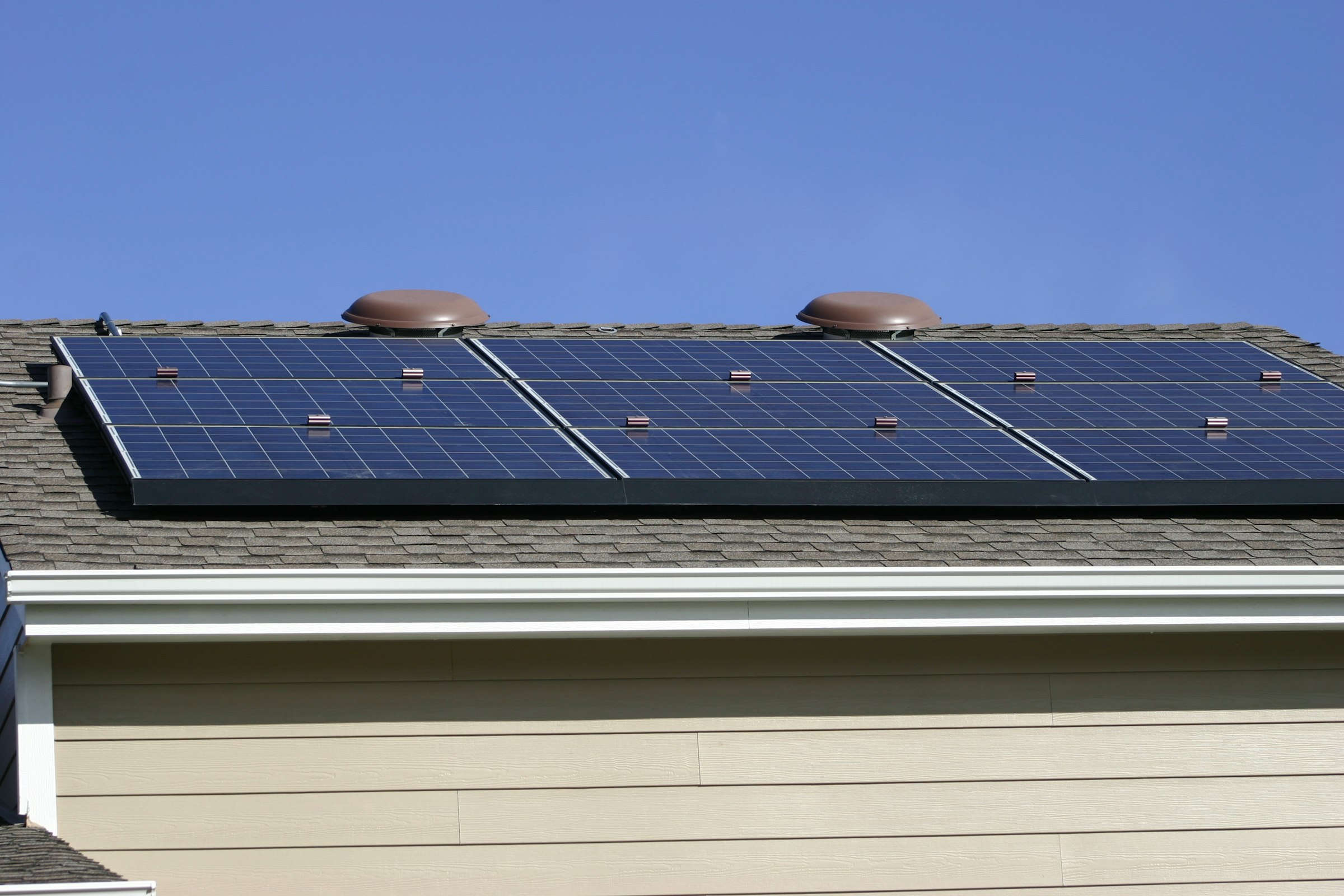
Residential rooftop solar in the real world. Photo by Michael Roberts on Unsplash.
Commercial and industrial solar
Section titled “Commercial and industrial solar”Larger roofs, parking structures, and ground-mounted arrays help businesses reduce purchased electricity and manage operating costs.
Utility-scale solar
Section titled “Utility-scale solar”These are large solar farms that feed power into the grid at scale. This is where solar becomes a grid resource, not just a building upgrade.
That spread across scales is one reason solar has become so important. The same technology family works for individual buildings and national power systems.
Watch or Read More
Section titled “Watch or Read More”So, What Is Solar Energy Really
Section titled “So, What Is Solar Energy Really”If I had to reduce it to one practical sentence, I would put it like this.
Solar energy is the conversion of sunlight into usable heat or electricity through technologies that let us capture one of the most abundant energy flows available on Earth.
And if I had to reduce it even further, I would say this.
It is sunlight, turned into infrastructure.
That is the reason the topic matters so much. Solar is not only an environmental concept or a science-class definition. It is now one of the main ways households, businesses, and power systems think about the future of energy.
Key Takeaways
Section titled “Key Takeaways”- Solar energy is radiant energy from the sun that can be used for electricity, heat, or building design strategies.
- Solar PV converts sunlight directly into electricity, while solar thermal captures sunlight as heat.
- Solar matters because it is renewable, low-emission in operation, scalable, and increasingly cost-competitive.
- The economics of solar have improved dramatically, with IRENA reporting in 2025 that 91% of new renewable capacity commissioned in 2024 beat the cheapest new fossil fuel alternative on cost.
- Solar is now a major global energy technology, with the IEA estimating around 2.2 TW of installed PV capacity worldwide in 2024.
Further Reading
Section titled “Further Reading”- How Solar Panels Work
- Types of Solar Systems
- On-Grid vs Off-Grid Systems
- Hybrid Inverter Explained
- Panel Efficiency Explained
Sources Used for This Page
Section titled “Sources Used for This Page”This page was expanded using the research notes and source list provided for this project, especially the following references.
- Britannica, Solar energy
- MIT Climate Portal, Solar Energy
- U.S. EIA, Solar explained
- U.S. EIA, Photovoltaics and electricity
- National Grid, How does solar power work?
- IRENA, Renewable Power Generation Costs in 2024
- IRENA, 91% of New Renewable Projects Now Cheaper Than Fossil Fuels Alternatives
- IEA, Global Energy Review 2025
- IEA, Electricity 2025 Executive Summary
- IEA-PVPS Snapshot 2024